
International online dating in 2026 is less about finding someone who looks good on a screen and more about reading the room across continents. Profiles, photos, and bios are just the entry fee. The real test begins when two people from different cultural backgrounds try to connect through text, video, and eventually real life. Etiquette is the filter that separates promising matches from awkward misunderstandings.
This article does not pretend that one checklist solves every cross-cultural relationship. Instead, it offers a practical, honest guide for anyone navigating international dating platforms, from Eastern European matchmaking sites to Latin American social apps and Asian diaspora communities. We will look at what works in first messages, how communication styles shift by region, which topics need time, and which warning signs are universal. If you are starting from zero, our broader guide on long-distance relationships covers the foundational mindset.
Why Cultural Context Shapes Online Dating Expectations
Every dating app or international site carries an unwritten contract. In some regions, directness is a sign of respect. In others, it can feel aggressive or even rude. The same message can read as confident in one culture and pushy in another. That is why “just be yourself” is incomplete advice when the person reading your message may interpret your tone through a very different lens.
Family involvement is a clear example. In many parts of Eastern Europe, Latin America, and South Asia, family approval and long-term intent matter earlier in the relationship than they typically do in Western Europe or North America. Someone from Colombia or Ukraine may ask about your values, your plans for children, or your career stability within the first few weeks. This is not “moving too fast” in their context; it is normal due diligence. Conversely, a person from a more individualistic culture may find those questions invasive before a video call has even happened.
Religious and social expectations add another layer. A match from a conservative background may prefer slower physical escalation, more formal language, and clearer signs of serious intent. A match from a secular, urban European background may expect casual banter and fluid plans. Neither is wrong, but mismatching expectations creates friction.
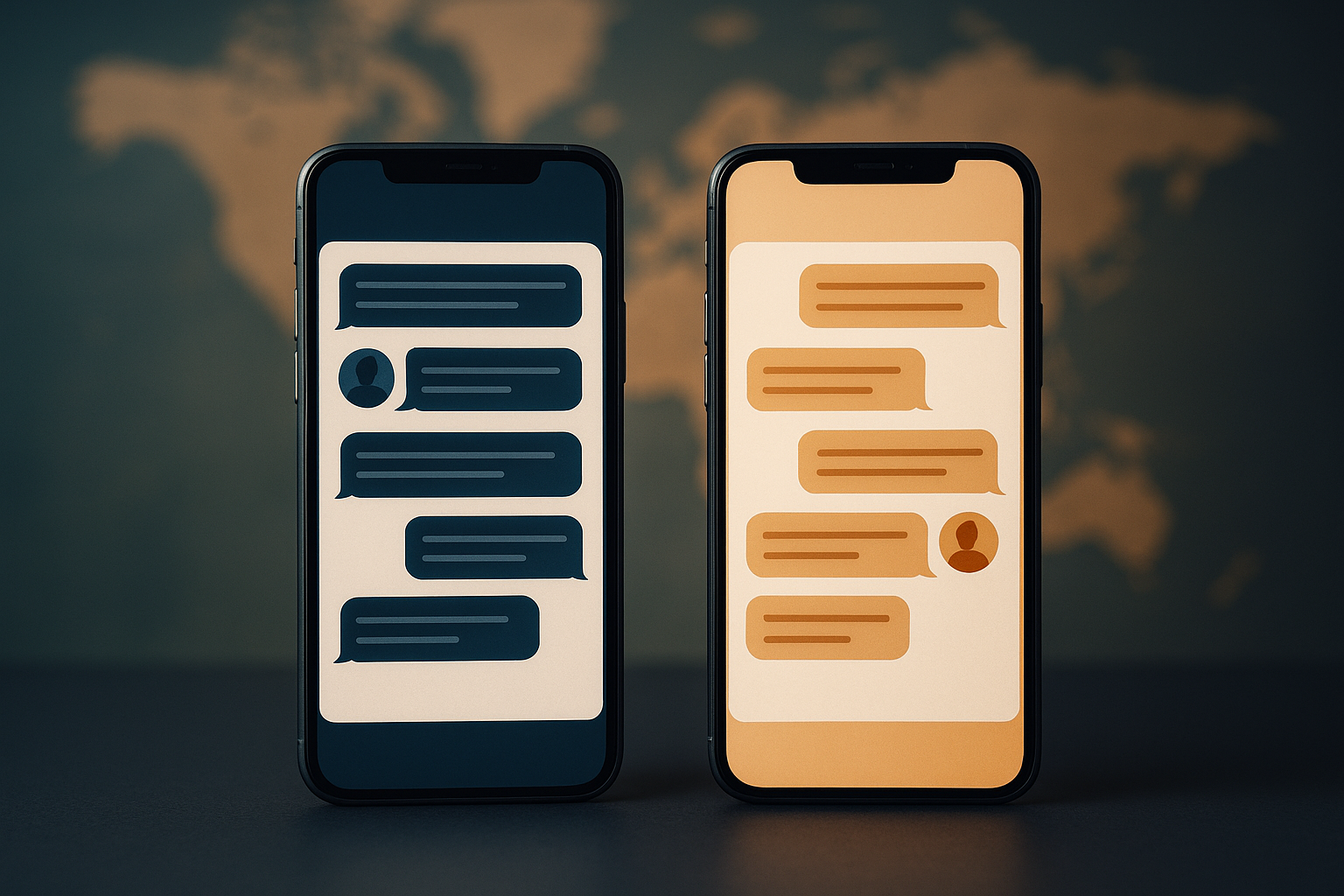
Money and class signaling also vary. In some countries, asking what someone does for a living is standard small talk. In others, it can sound like a financial vetting exercise. The safest default is to treat early conversations as a mutual interview for compatibility, not a background check for wealth.
The honest takeaway: cultural context is not an obstacle to overcome. It is information to interpret. The more you understand the norms your match grew up with, the less likely you are to mistake shyness for disinterest, or warmth for pressure.
Messaging Etiquette: First Contact Do’s and Don’ts
The first message is disproportionately important in international dating. You have no shared context, no mutual friends, and often no overlapping language beyond English. A bad opener can end the conversation before it starts. A thoughtful one shows that you read the profile and respect the distance between you.
Do:
- Reference something specific from the profile, not just the photos. A comment about a travel photo, a language, or a stated hobby proves you paid attention.
- Keep the first message shorter than you think. Two to three sentences are enough to start. Long paragraphs feel like homework.
- Ask one open question that is easy to answer. “What drew you to this platform?” is better than “Tell me about yourself.”
- Mention your own location and time zone casually. It signals transparency and sets realistic expectations for replies.
- Be patient with response times. International matches often work, study, or care for family across different schedules.
Don’t:
- Open with a compliment that focuses only on physical appearance. It is overused and crosses cultures poorly.
- Use slang, sarcasm, or idioms that do not translate well. “Netflix and chill” is not universal.
- Push for WhatsApp, Telegram, or another private channel in the first message. Platform chat exists for a reason.
- Demand explanations for delayed replies. “Why did you take so long?” sounds controlling in any language.
- Send follow-ups within hours. Double messaging after a few hours reads as impatience, not interest.
If you want a deeper breakdown of opener psychology, our guide on how to write the first message breaks down tone, length, and reply patterns.
Regional Communication Styles You Should Know
There is no single “Asian style” or “European style” of dating communication. Countries contain multiple regions, generations, and subcultures. Still, broad patterns can help you calibrate expectations when you match across borders. The table below is a starting point, not a rulebook.
| Region | Typical Communication Style | Response Rhythm | Topics to Approach Carefully |
|---|---|---|---|
| Eastern Europe | Direct, value-oriented, intent-focused | Replies may be thorough but not constant | Marriage timeline, financial support, moving abroad too soon |
| Latin America | Warm, expressive, family-centered | Faster-paced chat, emoji and voice notes common | Stereotypes about passion or poverty, assuming everyone is religious |
| East and Southeast Asia | Polite, indirect, harmony-preserving | Slower at first; consistency matters more than speed | Public criticism, open disagreement, premature physical topics |
| Sub-Saharan Africa | Respectful, story-driven, community-minded | Variable by platform and data costs; voice notes popular | Neo-colonial assumptions, treating the region as a single culture |
| Middle East and North Africa | Formal early, warmer once trust is built | Conservative pacing; family and faith often surface early | Alcohol, sexuality, political generalizations |

One mistake Western users make is reading brevity as coldness. In many East Asian and Eastern European contexts, concise replies can signal respect for your time, not lack of interest. Another mistake is assuming warmth equals availability. Expressive Latin American or Mediterranean-style communication is often social and friendly by default; it does not always mean romantic acceleration.
The best approach is to mirror early, then ask. If your match writes short messages, keep yours focused. If they share family updates, show interest without prying. If they use voice notes, consider responding in kind when the platform allows it. Adaptation beats assumption.
Topics That Can Wait: Money, Religion, and Exes
Some subjects are legitimate deal-breakers, but bringing them up too early usually backfires. International dating already has enough pressure without turning the first week into a vetting interview.
Money. It is reasonable to want a partner with compatible financial values. It is not reasonable to ask about salary, debt, or willingness to send gifts in the opening conversations. In cross-border dating, money talk can also trigger legitimate fears about scams or transactional intent. Keep financial details vague until trust exists. If someone pressures you for money, gifts, or investment help, treat it as a safety issue, not an etiquette one.
Religion. Faith shapes daily life, family expectations, and future plans. It deserves real conversation. But leading with “What religion are you?” can feel like a screening question. Let the topic emerge naturally through values, holidays, or family traditions. If religion is non-negotiable for you, say so clearly but kindly after a few exchanges.
Exes. Complaining about a former partner, comparing your match to an ex, or asking for relationship history too soon signals that you are not fully present. Save that conversation for when you are both invested enough to handle it with nuance.
Other early conversation landmines include political generalizations about a person’s country, unsolicited advice about their culture, and assumptions about gender roles. A good rule of thumb: if the topic would be sensitive on a second in-person date, it is probably too sensitive for a first-week chat across time zones.
Video Call and Long-Distance Etiquette
Text only gets you so far. A video call is where cultural chemistry either clicks or collapses. The transition from typing to talking is a milestone, and it has its own etiquette.
- Suggest, don’t demand. “Would you be open to a short video call this weekend?” respects their comfort level. “Send me a video call now” does not.
- Keep the first call short. Twenty to thirty minutes is enough to gauge voice, energy, and basic comfort without creating pressure.
- Mind the time zone. Proposing a call at 11 p.m. their time suggests you value convenience over their schedule.
- Dress and frame yourself like you would for a casual coffee. Pajamas, messy backgrounds, or poor lighting send a message whether you mean to or not.
- Put the phone or laptop at eye level. Looking down at a camera is less engaging and can feel slightly condescending.
- Be present. Notifications, multitasking, or checking messages during the call reads as disinterest. Mute distractions.
- Follow up after the call. A brief message saying you enjoyed the conversation keeps momentum and confirms respectful intent.
Long-distance etiquette also means managing jealousy and insecurity without surveillance. Asking for constant updates, photo proof, or location sharing early in the relationship creates a toxic dynamic. Healthy long-distance trust is built from consistency, not verification.
For platform-specific guidance, our review of the best international dating sites for marriage compares which services support translation, video chat, and identity verification, features that matter heavily when etiquette depends on clear communication.

Red Flags That Cross Every Culture
Etiquette is not just about politeness. It is also about recognizing behavior that is manipulative, dishonest, or unsafe regardless of cultural background. Some warning signs are universal.
- Love bombing. Excessive compliments, future promises, and declarations of strong feelings within days are not romance; they are pressure tactics.
- Refusal to video call. Everyone has camera anxiety, but a persistent refusal to show their face after weeks of chatting is a serious concern.
- Inconsistent details. Stories that shift about job, location, family, or travel plans suggest fabrication.
- Financial requests. Any request for money, gift cards, crypto, or help with a “temporary emergency” is a scam until proven otherwise.
- Isolation pressure. Trying to move you off the platform immediately, discouraging you from telling friends, or demanding secrecy are control behaviors.
- Cultural weaponization. Using their background to excuse rude, possessive, or demanding behavior, or using yours to shame you for boundaries.
Not every awkward moment is a red flag. Cultural missteps happen. But repeated patterns of pressure, dishonesty, or financial solicitation override any explanation. When in doubt, slow down, consult a friend, and review verified safety resources. Our romance scam red flags guide offers a step-by-step verification process for suspicious profiles.
Building Respect and Patience into the Foundation
International online dating rewards people who treat it as a slow build, not a sprint. The most successful matches we have observed share a few habits: they ask more than they assume, they clarify instead of guessing, and they accept that their match may need time to express interest in a way that feels natural to them.
Patience is not passivity. It is giving the other person room to show who they are. Respect is not agreement. It is acknowledging that different upbringings create different expectations and choosing to communicate through those differences rather than override them.
A few closing principles apply across the board:
- State your intentions honestly. If you want something serious, say so. If you are unsure, say that too. Ambiguity creates more hurt than honesty.
- Do not use cultural difference as an excuse to tolerate behavior that makes you uncomfortable. Boundaries are universal.
- Keep learning. Read up on the country, city, or community your match comes from, but let them be your primary source on their own life.
- Stay grounded. No amount of etiquette can replace genuine curiosity, kindness, and the willingness to be wrong and adjust.
Etiquette in international online dating is ultimately a form of respect for distance: geographical, cultural, and emotional. Get that right, and attraction becomes something that can actually survive the transition from screen to real world.