- Largest active user base of any dating app
- Simple, fast swiping interface
- Available in virtually every country
- Passport feature to match globally
- Video date feature
- Expensive premium tiers (Gold up to $30+/month)
- Free tier severely limited
- Overwhelming for users seeking serious relationships
- Significant pay-to-play algorithm
- High volume of ghost matches
Quick Verdict: 6.8/10
Tinder in 2026 is a platform that has built its reputation on scale and is now monetizing that scale aggressively. The experience for free users has become severely limited. Premium tiers are expensive. The algorithm strongly favors paid subscribers. And yet — the user base remains unmatched, and in major cities worldwide, Tinder remains the first app users open. For volume and geographic reach, nothing competes. For value and experience quality, there are better options. Score: 6.8 out of 10.
What Is Tinder?
Tinder launched in 2012 and fundamentally changed how dating apps work. The swipe mechanic — right for yes, left for no — was immediately intuitive and highly engaging. The double opt-in match system, where both parties must swipe right before messaging can begin, reduced the unsolicited-message problem that plagued earlier online dating platforms. These two innovations became so influential that nearly every dating app launched since 2012 has adopted some version of them.
Since those early years, Tinder has grown to claim over 75 million active monthly users globally, operating in nearly every country on earth. The platform is owned by Match Group, the conglomerate that also owns Match.com, Hinge, OkCupid, Plenty of Fish, and a portfolio of other dating platforms. Match Group has managed Tinder’s monetization aggressively, particularly from 2019 onward, creating a product that generates substantial revenue while providing a noticeably degraded experience for free users.
- Daily likes are capped at approximately 100.
- The “Likes You” grid is fully paywalled.
- Profile visibility is suppressed for non-paying users.
- Free users see a curated and limited slice of the broader user base.
| Plan | Cost (per month) | Features |
|---|---|---|
| Tinder Plus | $10-15 (under 30) | Unlimited likes, Passport, Rewinds, limited boosts |
| $20-25 (30 and over) | ||
| Tinder Gold | $20-30 (under 30) | Includes “Likes You” grid |
| $30-40 (30 and over) | ||
| Tinder Platinum | $30-40 (under 30) | Adds message before matching, prioritized like delivery |
| $40+ (30 and over) |
Registration and Profile Setup
Registering for Tinder requires a phone number and, for users under 18, is not available. The signup process asks for your gender, sexual orientation, age, and preferences. Profile setup emphasizes photos — Tinder allows up to nine photos, and the first photo is the dominant factor in whether users swipe right or left. For a broader comparison before committing to Tinder, our top 10 dating sites rankings cover every major platform in 2026.
The profile bio on Tinder is limited to 500 characters — enough for a brief personality sketch or a clever hook but not for detailed self-description. Tinder also offers “Interests” tags selected from a preset list, “Prompts” (short text responses to conversation-starter questions), and an Anthem (a musical artist that represents you).
Tinder now supports video in profiles — users can include short video clips alongside photos. This addition helps differentiate profiles in crowded markets and gives potential matches a better sense of personality than photos alone.
Photo quality matters enormously on Tinder. The swipe-based interface means users make decisions in seconds, almost entirely based on visual impression. A clear, attractive, recent headshot as the primary photo is the single most impactful change you can make to your Tinder performance. The rest of the profile matters for conversions after matching, but the photo is what drives the match in the first place.
How Tinder’s Algorithm Works
Tinder’s matching algorithm has been extensively analyzed and documented by researchers and tech journalists over the years. While the company does not disclose exact algorithmic details, the broad mechanics are well understood.
The system maintains a desirability score for each profile based primarily on the rate at which that profile is right-swiped by other users. Higher desirability scores result in greater profile visibility — you are shown to more people, and specifically to people with similar desirability scores. Low desirability scores result in reduced visibility and being shown primarily to other low-scoring profiles.
Premium subscriptions provide direct algorithmic advantages. Tinder Boost (a paid feature available to all subscribers) dramatically increases profile visibility for 30 minutes. Tinder Platinum’s “prioritized likes” feature ensures your likes are shown to potential matches before non-premium likes. The cumulative effect of these features means paying users experience a substantially different — and more functional — version of the app than free users.
The geographic concentration of the user base creates significant variation in experience quality. In major metropolitan areas — New York, London, Paris, Toronto, Sydney — the user base is dense enough that even Tinder’s algorithmic filtering leaves a substantial pool of profiles to engage with. In smaller cities and rural areas, the active user base may be thin enough to limit meaningful results regardless of membership tier.
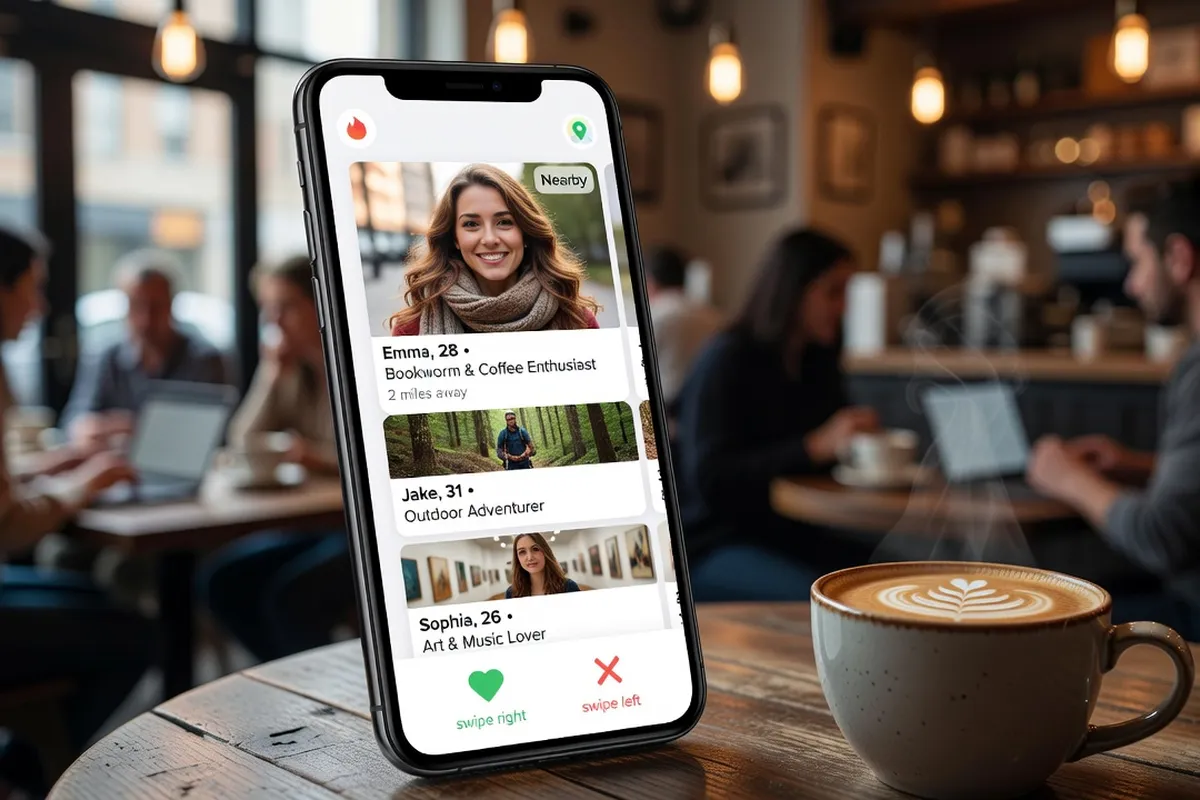
Ranking depends heavily on recent activity signals, which is why profile freshness matters so much.
For users whose primary goal is serious long-term relationships, our guide to finding serious relationships online provides perspective on how Tinder compares to platforms specifically designed for relationship-oriented users. If you are weighing Tinder against other major apps specifically on matching quality, our full comparison of dating app matching algorithms puts Tinder’s desirability-score system side by side with how Hily, Bumble, and other platforms approach the same problem.
Features
The core Tinder experience is the swipe interface — fast, visual, and addictive by design. Beyond this, the platform offers: Users considering alternatives to Tinder will find our Bumble review offers a useful direct comparison on features and matching dynamics.
Passport (Gold and Platinum): Change your location to anywhere in the world and swipe on profiles in that location. Useful for travelers who want to set up matches before arriving in a new city. Also popular for international dating.
Super Like (limited for free users, unlimited for subscribers): A more emphatic like that notifies the recipient. Super Likes increase the probability of a match by approximately 3x according to Tinder’s own data.
Video Date: In-app video calling for matched users. Requires no premium membership — available to all users once a match is made. A useful feature for the early stages of connection before meeting in person.
Tinder Feed: A social media-style feed showing Stories content from your matches. Less used than the core swipe functionality but adds a social dimension to ongoing match relationships.
Reactions: Emoji reactions to specific profile photos. A conversation starter that requires less commitment than a written opening message.
Pricing and Value Assessment
Tinder’s pricing in 2026 represents one of the most aggressive premium monetization strategies in consumer tech. The age-tiered pricing means users over 29 pay significantly more for identical features — a practice that has faced regulatory scrutiny in some markets but persists globally.
| Tier | Features |
|---|---|
| Free | Severely limited daily likes, no “Likes You” access, algorithmically suppressed visibility |
| Tinder Plus | Unlimited likes, Passport, Rewinds, limited boosts |
| Tinder Gold | Adds “Likes You” grid, seeing who liked you before matching |
| Tinder Platinum | Adds message before matching, prioritized like delivery |
For most users, the “Likes You” feature available in Gold is the meaningful upgrade that makes the platform usable. The ability to see who already liked you before matching transforms the experience from active outbound swiping to strategic inbound selection — a fundamentally more efficient use of time.
Safety
Tinder offers photo verification through a selfie-matching system similar to Badoo’s. The system compares a real-time selfie against profile photos and marks verified profiles with a blue checkmark. Our comprehensive online dating safety guide covers the risks specific to high-volume swipe-based platforms.
The platform also offers a “Noonlight” integration for users in the United States — a safety feature that allows users to share their date location with a trusted contact and provides a discreet check-in system during dates. This feature is more developed than what most competing apps offer and reflects Tinder’s belated but genuine investment in user safety.
Fake profiles and scammers exist on Tinder at a rate proportional to the platform’s scale. Standard precautions apply: video chat before meeting, arrange first meetings in public places, and report suspicious profiles.
Our Experience After 30 Days
Thirty days testing Tinder confirmed the platform’s core dynamic: vast scale with significant pay-to-play mechanics. As a Gold subscriber in a major city, the experience was functional but not exceptional. The match volume was high, but ghosting rates were also high — many matches made no response to initial messages.
Match volume was high over thirty days, but the conversion rate to actual meetings stayed low.
We generated 150+ matches over 30 days. Approximately 40% engaged in at least one message exchange. 8% developed into conversations worth pursuing. 2% resulted in actual meetings. These conversion rates — from match to meeting — are lower than on more focused platforms, reflecting Tinder’s casual-dating culture and the high proportion of users who match but do not actively pursue connections.
The Passport feature was genuinely useful for pre-travel matching — setting the location to an upcoming destination two weeks before traveling and building connections in advance. This use case alone makes Tinder Gold worth the cost for frequent international travelers.
Tinder vs Competitors: When It Is and Is Not the Right Choice
- Tinder vs Bumble:
- Tinder has more users globally and allows men to initiate contact.
- Bumble produces higher conversation quality in its strong markets.
- For volume, Tinder wins; for quality, Bumble is preferable where it is active.
Tinder vs Hily: Hily’s AI matching produces smarter suggestions in a smaller pool. Tinder produces more suggestions in a less curated pool. In major cities, Tinder’s volume advantage can produce more total quality connections despite lower per-match quality. In smaller markets where Hily has limited presence, Tinder’s user base depth becomes decisive.
Tinder for serious relationships: Users seeking long-term partners should treat Tinder as one tool among several rather than the primary platform. Serious relationship seekers on Tinder spend more time filtering through casual-only users than on platforms designed for relationship-focused communities. Supplementing Tinder with Hinge or a specialized international platform dramatically improves serious relationship outcomes.
Tinder for travel: The Passport feature is Tinder’s clearest competitive advantage for internationally mobile users. Setting your location to an upcoming destination 1-2 weeks before arrival and accumulating matches to message when you arrive is a well-established strategy that makes first-day-in-a-new-city social connection significantly easier. No competing app offers equivalent global reach with a location-change feature at this price point.
Tinder in 2026: The Honest Assessment
Tinder’s trajectory since 2019 has been a consistent progression toward more aggressive monetization at the cost of user experience. Each successive tier introduction and free-tier restriction has made the baseline product less useful while expanding the premium revenue ceiling. For users ready to get started, our how to write a dating profile guide covers the specific optimization strategies that work best on swipe-based platforms.
The platform survives on inertia — it is the first app people think of for dating, and its user base is large enough that even a degraded free experience produces sufficient matches to keep users engaged. But for users who approach dating strategically and are willing to invest in better tools, the combination of a quality AI-powered app like Hily for local matching and a specialized international platform for cross-cultural connections typically outperforms a Tinder Gold subscription at comparable or lower total cost.
Tinder in 2026 is a legacy product with an unmatched user base. Use it for what it is best at — volume in major cities and Passport-enabled pre-travel matching — and supplement with better-designed alternatives for everything else.
Tinder’s success depends heavily on your opening move — our guide on writing first messages that work covers exactly that.
Frequently Asked Questions
How much does Tinder Gold cost in 2026? Tinder Gold costs approximately $15-30/month depending on your region and age. Tinder Platinum (the top tier) costs $30-40/month. Prices vary significantly by country.
Is Tinder good for serious relationships? Tinder can lead to serious relationships, but it is primarily a casual dating app. For users specifically seeking long-term partners, apps like Hinge, Match, or international niche sites tend to deliver better results.
How does Tinder’s algorithm work? Tinder uses an ELO-like desirability score system that prioritizes profiles based on right-swipe rates. Premium subscribers receive algorithmic boosts. Active users who upgrade to paid tiers see significantly more profile visibility.
Is Tinder free to use? Tinder has a free tier, but it limits daily likes (approximately 100/day), does not show who liked you, and restricts profile visibility. The free experience has degraded significantly since 2020.
What is the difference between Tinder Gold and Tinder Platinum? Tinder Gold includes unlimited likes, passport, rewinds, and seeing who liked you. Tinder Platinum adds message before matching and prioritized likes. Most users find Gold sufficient.
Tinder remains the most ubiquitous dating app, but its value for serious daters has declined as costs have risen. It works best as a volume tool in major cities. For international or serious dating, niche platforms offer far better results.
For more resources, visit our guide to finding serious relationships online.