
Introduction: Online Dating Safety in 2026
Online dating has become one of the most common ways couples meet. In the United States, over 30% of adults have used a dating app or website. Globally, hundreds of millions of people use these platforms to find partners. For the vast majority, the experience is safe and leads to genuinely positive relationships.
However, online dating does carry risks that vary by platform type and user behavior. Romance scams — in which fraudulent profiles cultivate emotional connections for financial exploitation — cost victims in the United States over $1.3 billion in 2023 according to the FTC, making them one of the most financially damaging forms of fraud. Physical safety risks, while less common, require attention when meeting people in person.
This guide covers every dimension of online dating safety: recognizing scams, verifying identities, protecting personal data, meeting safely in person, protecting your finances, and reporting fraud. Following these guidelines does not diminish the experience of online dating — it simply ensures that the genuine connections you pursue are exactly what they appear to be.
Section 1: Recognizing Romance Scams
Romance scams are the most significant financial risk in online dating. Understanding how they work is the most effective protection. Our top 10 dating sites rankings specifically flag the safety track record of each platform, which can help you choose a safer starting point.
The Classic Romance Scam Pattern
Romance scams typically follow a predictable progression:
Stage 1 — The Ideal Profile: A very attractive profile appears, often claiming to be a professional (doctor, engineer, military officer, oil rig worker) based overseas. The photos are typically professional quality and very appealing. The profile details seem almost perfectly aligned with your preferences.
Stage 2 — Rapid Escalation: Contact begins quickly and communication moves fast. The scammer is attentive, emotionally perceptive, and mirrors your interests and values with suspicious precision. Declarations of strong feelings come very early — within days or a few weeks of first contact.
Stage 3 — Avoiding Verification: Video calls are consistently avoided or technically problematic. The person always has a reason why video calls do not work — bad internet, broken camera, security restrictions from their job. Communication moves off the dating platform to email or messaging apps.
Stage 4 — The Crisis: An emergency arises that can only be resolved with money. Medical expenses for a parent, a business deal that just needs bridge financing, travel costs to come visit you, a customs fee to release a package. The stories are emotionally compelling and create urgent pressure.
Stage 5 — The Escalation: Once a victim has sent money, requests escalate. Each resolved crisis reveals a new one. Amounts increase. The victim’s financial resources are systematically depleted.
The Pig Butchering Scam
A more sophisticated variant, particularly associated with Asian-origin operations but practiced globally, is the “pig butchering” scam (from the Chinese “sha zhu pan”). This scam involves:
- A longer patient relationship-building phase before any financial request
- The introduction of a “great investment opportunity” — typically cryptocurrency
- The victim is steered to a fraudulent trading platform that shows convincing fake profits
- Larger and larger deposits are encouraged
- When the victim tries to withdraw funds, fees and taxes must be paid first
- Eventually the platform disappears along with the deposited funds
The pig butchering scam specifically targets dating app users because of the trust built through romantic context. Losses can reach tens or hundreds of thousands of dollars.
Key Red Flags Summary
- Profiles that seem too perfect or too compatible
- Very quick emotional escalation
- Consistent refusal or inability to video call
- Requests to move communication off the dating platform within days
- Overseas location (military, oil rig, medical mission, business travel) that prevents meeting
- Any financial request, regardless of how small or how compelling the story
- Cryptocurrency investment suggestions
- Pressure to keep the relationship secret from friends and family
Section 2: Verifying Identity
Verifying that someone is who they claim to be is the most direct protection against fake profiles and scams.
Video Calling
A live video call is the gold standard for identity verification. It confirms:
- The person exists as a real human being
- They look like their profile photos
- They are responding in real time to your conversation
Request a video call within the first week of meaningful conversation. Any genuine person will readily accommodate this request. Consistent technical excuses for avoiding video calls are a significant warning sign. If you are unsure what a normal first video call should look like or how to steer it toward genuine verification, our first video call guide for online dating in 2026 walks through exactly what to watch for.
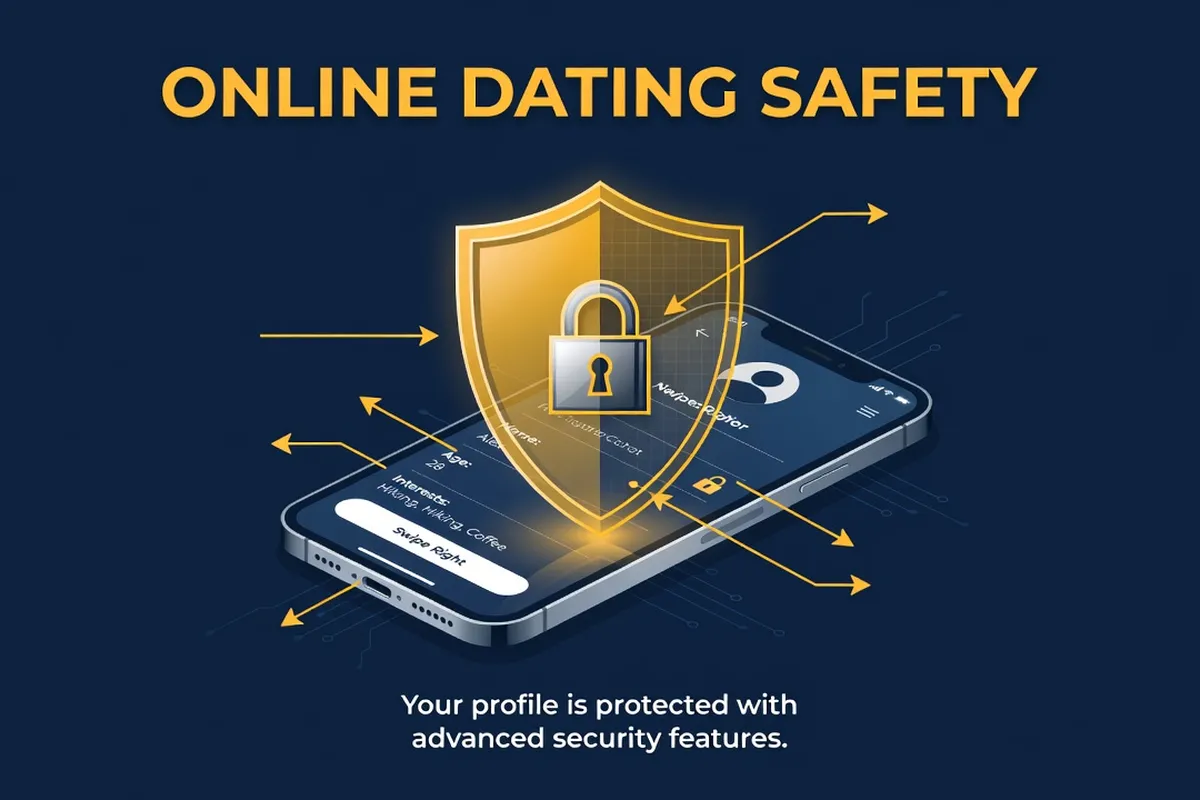
Watch whether the person responds naturally to the conversation or appears to be reading from a script.
For video calls with people from international dating platforms, choose a time when both parties are comfortable and in a well-lit environment. Pay attention to whether the person seems to be responding naturally to conversation or appears to be reading from a script. Note any inconsistencies between what they told you about themselves and what you observe in the call.
Reverse Image Search
Save profile photos and run them through Google Images or TinEye reverse image search. This reveals whether the photos have been used elsewhere online — stock photo sites, social media accounts belonging to different people, or other dating profiles. Scammers frequently use photos stolen from attractive public Instagram or social media accounts.
If a reverse image search reveals that photos belong to a different person, the profile is fraudulent. End contact immediately and report the profile to the platform.
Specific Knowledge Questions
Ask questions about specific local details — the names of streets in their neighborhood, local restaurants, recent local news events, specifics about their workplace. Genuine people can answer these questions naturally. Scammers operating from overseas and working from scripted personas often struggle with specific local knowledge.
Section 3: Protecting Your Personal Data
Online dating requires sharing personal information, but that sharing should be graduated and deliberate. What you include in your profile directly affects your data exposure — our how to write a dating profile guide covers which details to withhold without hurting your match rate.
What to Share and When
Before any video call: Username and messaging within the platform only. No personal contact information.
After a positive video call: Consider sharing a messaging app username (WhatsApp, Signal, Telegram). Still avoid sharing your full name, home address, or workplace.
After several video calls and meaningful communication: Sharing first and last name is reasonable. Still avoid sharing home address, workplace address, or financial information.
Only after meeting in person: Home address, workplace address, personal email.
For comprehensive relationship advice and safety resources beyond the technical dimensions covered here, visit relationship advice and safety resources which covers the emotional and psychological dimensions of online dating safety.
Social Media Caution
Be aware that many dating profiles are linked to social media accounts, and social media accounts can reveal significantly more personal information than you intended to share with a new connection. Check your Instagram, Facebook, and other social media profiles for information that reveals your home address, workplace, daily routines, or financial circumstances.
Consider maintaining a degree of separation between your dating app presence and your main social media profiles, particularly in the early stages of a connection.
Device and Account Security
Use a strong, unique password for your dating app accounts. Enable two-factor authentication where available. Be cautious about clicking links shared by matches — phishing links that capture login credentials or install malware are a documented risk in online dating contexts.
Section 4: Safe In-Person Meetings
When the time comes to meet in person, specific precautions make the experience significantly safer.
First Meeting Best Practices
Choose a public venue: Coffee shops, restaurants, and public parks are ideal. Avoid private locations — your home, their home, or secluded outdoor areas — for first meetings.
Tell someone where you are going: Before every first date, tell a trusted friend or family member the person’s name, where you met, and where you are going. Some people establish a check-in protocol — a text when they arrive and when they leave.
Arrange your own transport: Drive yourself or use a rideshare. Do not accept rides from the person you are meeting for the first time, and do not get in their vehicle.
A charged phone with emergency contacts accessible remains one of the simplest safety tools available.
Keep your phone charged and accessible: A charged phone with emergency contacts accessible is a basic safety tool. Some people use the “Noonlight” app (integrated with Bumble and available independently) which allows you to trigger a safety alert if you feel unsafe.
Trust your instincts: If something feels wrong when you meet in person — the person seems very different from who they presented online, their behavior makes you uncomfortable, or you feel any form of pressure — it is completely appropriate to end the meeting and leave. You do not owe anyone an extended interaction.
These precautions matter even more when you are meeting someone in an unfamiliar city. Our dedicated dating safety tips for solo travelers guide expands on this section with country-specific considerations and app-based safety tools built for travelers.
Multiple Meetings Before Increasing Trust
Safety in in-person dating is a gradual process. The first meeting establishes initial comfort. Subsequent meetings build familiarity. Trust should be calibrated to the length and depth of the relationship rather than assumed from initial positive impressions.
The goal of early in-person meetings is to establish whether the online connection translates to genuine in-person compatibility. Most do — the overwhelming majority of online connections who meet in person are exactly who they presented themselves to be. The precautions above are low-cost insurance against the minority of cases where they are not.
Section 5: Protecting Your Finances
Financial protection is the area where online dating safety has the most significant real-world stakes. Credits-based platforms like those reviewed in our VictoriaBrides review warrant particular attention to financial safety practices.
The Absolute Rule
Never send money to someone you have not met in person. This rule has no exceptions. The stories that accompany financial requests on dating platforms — no matter how emotionally compelling, no matter how small the initial amount — are not credible reasons to override this rule.
- Bank transfers
- Wire transfers
- Gift cards (a specific scam indicator — legitimate emergencies are never resolved by gift cards)
- Cryptocurrency transfers
- PayPal, Venmo, or other payment apps
- “Loans” that you will be “paid back”
- Any other financial transaction
If you are in a relationship with someone you have not met in person and they are requesting money, the relationship is not what it appears to be. This is painful to acknowledge, but it is the most important insight in this guide.
If You Have Already Sent Money
If you have already sent money to a scammer:
- Stop all further transfers immediately
- Contact your bank — some transfers can be reversed
- Document all communications for reporting purposes
- Report to your national fraud authority (FTC in the US, Action Fraud in the UK, the ACPR in France)
- Report the profile to the dating platform
- Consider whether to seek support from a trusted person about the emotional impact
The emotional impact of discovering you have been scammed is significant. Victims often feel shame that prevents them from reporting. Reporting is important both for your own recovery and to protect others.
Section 6: Platform Safety Features
Understanding the safety features available on dating platforms helps you use them effectively.
Most reputable dating platforms provide:
- Profile reporting tools
- Photo verification (selfie matching against profile photos)
- Block and unmatch features
- Communication monitoring for suspicious patterns
- Customer support for safety-related reports
Use these features actively. Report profiles that exhibit scam indicators, profiles that are evidently fake, and users who send inappropriate or threatening messages. Platform moderation teams act on reports — your report may protect other users from the same bad actor.
For a practical checklist of specific red flags, see our guide on spotting fake profiles.
Frequently Asked Questions
How do I spot a romance scam on a dating site? Key red flags: profiles that seem too perfect, quick escalation to declarations of love, requests for money or gift cards, refusal to video chat, stories involving overseas work or military deployment, and requests to move communication off the dating platform.
How can I verify someone is who they say they are on a dating site? Request a video call early in the conversation. Use reverse image search (Google Images, TinEye) to check if their photos appear elsewhere online. Ask specific questions about their location, job, and daily life that would be hard to fake.
Is it safe to meet someone from a dating app in person? Yes, with precautions: meet in a public place, tell a friend or family member where you are going, arrange your own transport, and keep your phone charged. Do not share your home address until you have established trust over multiple meetings.
Should I share my phone number on a dating app? Wait until you have video-chatted and feel confident about the person before sharing personal contact information. Many dating apps have built-in messaging that is safer for initial communication.
What should I do if I think I am being scammed? Stop all communication immediately. Do not send money under any circumstances. Report the profile to the dating platform. If you have already sent money, contact your bank immediately. Report to the FTC (US) or equivalent in your country.
For more resources on this topic, check out relationship advice and safety resources.