
Introduction: The Muslim Dating Landscape in 2026
Muslim dating occupies a unique space in the broader online matchmaking world. The challenge — finding a life partner while respecting Islamic values around courtship, modesty, and the purpose of a relationship — is not one that mainstream apps are designed to address. The dedicated Muslim dating platforms that have emerged over the past decade represent genuine attempts to solve this problem, with varying degrees of success.
The Muslim global population exceeds 1.8 billion people, representing approximately 24% of humanity. Yet until the mid-2010s, the options for Muslim singles seeking partners online were almost entirely limited to general dating apps that were structurally indifferent to Islamic values. The emergence of dedicated halal dating platforms has been a significant development for Muslim communities worldwide, particularly in Western countries where traditional family matchmaking networks may not be as accessible as in Muslim-majority countries.
This guide evaluates the five best Muslim dating platforms in 2026 based on their adherence to Islamic values, practical functionality, user base size, and safety infrastructure.
What Makes a Dating Platform Halal?
Before ranking the platforms, it is worth defining what halal compliance means in the dating app context. Islamic scholars have debated the permissibility of online dating, but the general consensus in contemporary Islamic guidance distinguishes between permissible and impermissible approaches based on intention and methodology.
-
Seeking a spouse with the intention of marriage
-
Maintaining modesty in communications
-
Involving family (wali) in the process where appropriate
-
Avoiding physical contact before marriage
-
Keeping communications within the bounds of decent conduct
-
Seeking relationships for physical pleasure without marriage intent
-
Engaging in flirtatious conversations that violate modesty norms
-
Pursuing relationships that involve haram physical conduct
-
Using dating platforms to deceive
Apps designed for the Muslim market incorporate these distinctions into their feature sets. Key indicators of halal design include: a wali (guardian) involvement feature, a marriage intentions indicator, privacy options for women that limit who can view their profile, an Islamic observance matching system, and community guidelines explicitly based on Islamic values.
Top 5 Muslim Dating Sites and Apps
1. Salams (formerly Minder/Muzmatch) — Clear Market Leader For context within the broader international dating market, our top 10 dating sites rankings include the top-ranked Muslim platforms.
Score: 7.9/10 | App-based | Free tier + Premium
Salams is the undisputed market leader for Muslim dating in the Western world. The merger of Minder and Muzmatch in 2022 created the largest English-speaking Muslim dating community under a single brand, and the combined platform has delivered on the promise of scale while maintaining its faith-specific features.
The app’s halal features are thoughtfully implemented. The wali feature is optional but genuine — it allows a family member to be added to a user’s conversations as a silent supervisor, maintaining the traditional oversight role in an app-based context. The intentions filter lets users specify and match on marriage timeline. The Islamic observance matching allows filtering by prayer frequency and other practice indicators.
The free tier is more functional than most dating apps offer without payment — basic swiping and messaging are available without a subscription. Premium adds “Likes You” visibility and advanced filters for approximately $20-30/month.
Best for: Muslim singles in major Western cities seeking the largest possible compatible community.
2. Muzz — Best for UK and Middle East Users
Score: 7.7/10 | App-based | Free tier + Premium
Muzz is the UK-facing brand of the same platform family as Salams, following the 2022 merger. In the United Kingdom — where it was originally founded as Muzmatch — Muzz maintains stronger brand recognition and a deeper-rooted community than the Salams brand.
The platform is also more active in the Middle East and South Asia than Salams, making it a strong choice for users in those regions or those seeking partners from those backgrounds. Feature parity with Salams is essentially complete, as both run on shared infrastructure.
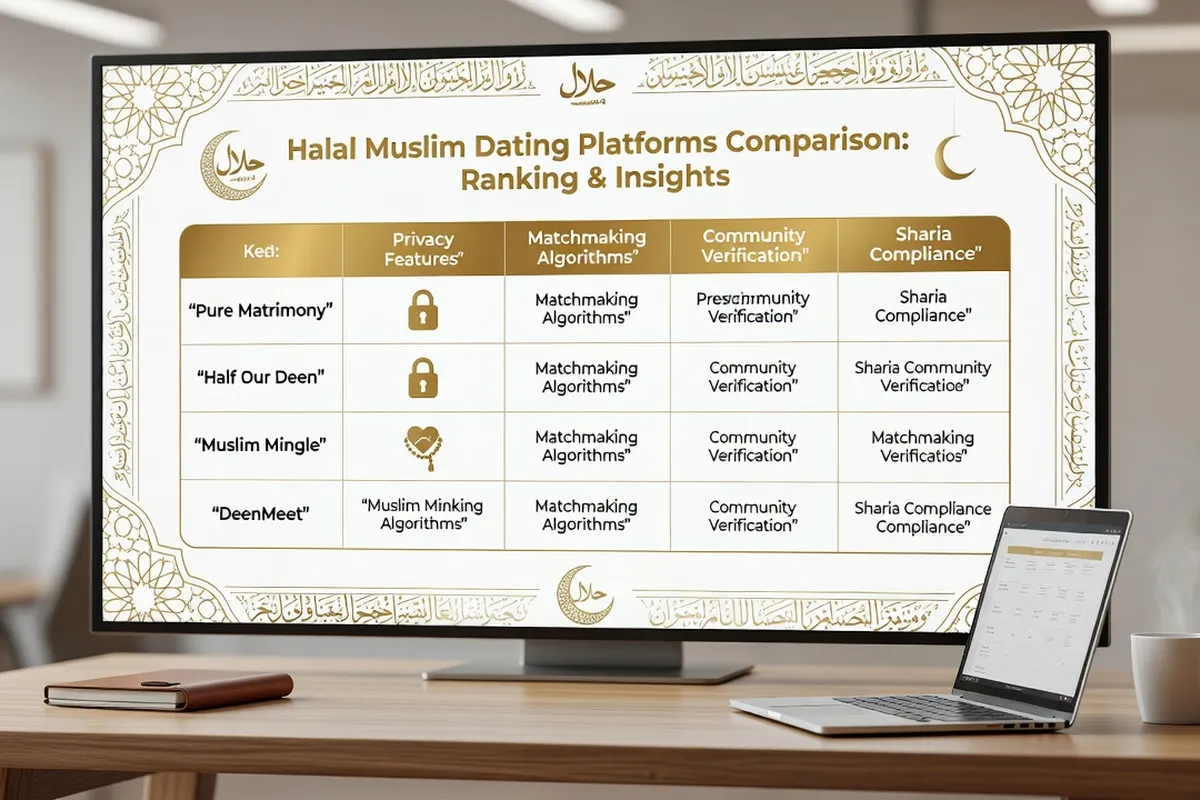
Regional strength varies: a platform that dominates one market can be marginal in the next one.
Best for: UK-based Muslim singles; users seeking partners from South Asian or Middle Eastern backgrounds.
3. IslamicMarriage.com — Traditional Approach
Score: 7.0/10 | Web-based | Subscription
IslamicMarriage.com represents the more traditional end of the Muslim matchmaking spectrum. The platform is explicitly oriented toward marriage — not dating — and its community guidelines and profile structure reflect this focus. The site is web-based rather than app-based, which limits its accessibility for mobile-first users but appeals to an older demographic that prefers the desktop experience.
The platform has been operating since the early 2000s and has an established community. Verification and moderation standards are consistently applied. The subscription model ($20-25/month) provides straightforward access without the credits or premium-tier complexity of newer apps.
Best for: Muslims seeking a more traditional, marriage-focused platform without app-based features.
4. Single Muslim — UK Heritage Platform
Score: 6.9/10 | Web and App | Subscription
SingleMuslim.com has been operating since 2000 and has an established user base primarily in the United Kingdom. The platform has both web and app versions and a subscription model. It is less feature-rich than Salams or Muzz but has a well-established community and strong reputation within the British Muslim community.
For users interested in the broader landscape of Muslim marriage practices and cultural expectations, Muslim marriage resources in French provides additional perspective for French-speaking Muslim communities.
Best for: UK-based Muslims who prefer an established platform with a long track record.
5. Hawaya (formerly Harmonica) — Women-First Approach
Score: 7.2/10 | App-based | Free tier + Premium
Hawaya is a Muslim dating app specifically designed with women’s experience as the primary design consideration. The app gives women more control over who can see their profiles and who can contact them, reflecting Islamic modesty values around female privacy. Male users can see female profiles only once a woman has expressed interest, which is a more conservative approach than most apps.
This design creates a more comfortable environment for observant Muslim women who might otherwise be reluctant to use dating apps. The trade-off for men is lower visibility and more passive matching — a worthwhile exchange for users whose primary goal is meeting women who are genuinely comfortable with the platform’s approach.
Best for: Observant Muslim women; men who prioritize meeting women who are genuinely comfortable and enthusiastic about using dating apps.
Navigating Islamic Dating in a Western Context
For Muslims living in Western countries, the challenge of finding a halal relationship has specific dimensions that users in Muslim-majority countries may not face. Family matchmaking networks are typically less accessible. Social segregation by religion is less common. And the general cultural assumption that dating leads to marriage is less prevalent in Western culture than in Muslim communities.
Muslim dating apps address this gap by creating a space where the intention and cultural context of courtship is shared from the beginning. Unlike using a general dating app and hoping to find a compatible Muslim partner, these platforms provide a community where Islamic values around relationships are the baseline expectation.
The practical dynamics vary significantly by city and country. In major cities with large Muslim communities — London, Toronto, New York, Houston, Detroit, Birmingham — the user base on Muslim dating apps is dense enough to provide meaningful choices. In smaller cities, the pool may be thinner, but the quality of compatible matches can still make the experience worthwhile.
Features like the wali option exist because family involvement is handled very differently by different users.
Family involvement remains a sensitive topic on Muslim dating apps. Some users prefer to keep their online dating activity private from family until they have identified a serious potential partner. Others involve family from the beginning. The wali feature on Salams and Muzz accommodates both approaches without judgment.
Practical Strategies for Muslim Dating Apps
Getting meaningful results from Muslim dating apps requires approaches that respect both the platform’s community norms and Islamic values around courtship. Our online dating safety guide includes a section on the specific fraud patterns that target religious communities on dating platforms.
Be explicit about your Islamic observance and expectations: Vague profiles generate mismatched matches. Being specific about your level of religious observance — how often you pray, whether you follow dietary restrictions strictly, how you approach gender interaction — helps the platform’s matching algorithm surface compatible profiles and helps potential matches self-select for compatibility. Ambiguity about observance level is one of the most common sources of mismatched connections on Muslim dating platforms.
Treat the process as deliberate and purposeful: Muslim dating culture values intentionality. Users who approach these platforms as seriously as they would approach any important life decision — with clear goals, thoughtful communication, and patience — consistently report better outcomes than users who approach them casually. The platforms are designed for this serious approach, and the community culture reflects it.
Use the intentions filter early: Most Muslim dating apps allow users to specify and display their marriage timeline intentions. Filtering matches by compatible intentions before investing time in conversations saves significant effort. A user who wants to get married within the next year and a user who is years away from being ready for marriage will not be compatible regardless of other factors — the intentions filter catches this early.
Involve family at the right moment: The question of when and how to involve family in a developing connection is deeply personal and culturally variable. Some Muslim communities expect early family involvement; others leave it to individual discretion. Understanding the cultural expectations of the person you are connecting with helps calibrate this sensitive transition. The platforms support whatever approach both parties are comfortable with.
Be patient about geographic limitations: Outside major cities, the Muslim dating app user base is genuinely thin. Users in smaller cities or areas with small Muslim communities should set their search radius broadly and be open to long-distance connections in the early stages. Many Muslim couples who met on dating apps conducted the early stages of their relationship at distance before relocating to be together — this pattern is well-established in the community.
Understanding Diversity Within the Muslim Community
The Muslim community is extraordinarily diverse, and Muslim dating platforms serve this diversity in ways that require acknowledgment. Before you start, our how to write a dating profile guide covers the specific nuances of presenting yourself honestly on religious matchmaking platforms.
Islamic practice varies enormously — from highly observant communities where every aspect of daily life is governed by religious practice, to culturally Muslim communities where faith is an identity marker more than a practice guide. Muslim dating platforms attempt to accommodate this spectrum through observance-level filters, but the reality is that “Muslim” encompasses vastly different lived experiences.
Geographic and cultural background adds another layer of complexity. A Pakistani-British Muslim woman, a Turkish-American Muslim man, a Moroccan Muslim woman living in France, and a Nigerian Muslim man all share a religious identity that means very different things in cultural practice. The best Muslim dating app interactions acknowledge and explore these differences rather than assuming that shared religious identity means shared cultural expectations.
Sectarian diversity — Sunni, Shia, Ahmadiyya, Ismaili, and other Islamic traditions — is present on Muslim dating platforms but less well-served by the filtering tools most platforms provide. Most platforms are most heavily populated by Sunni Muslims, reflecting global demographic proportions. Users from minority Muslim traditions should set realistic expectations about the size of their compatible pool within any platform.
The most successful relationships that develop through Muslim dating apps are typically built on explicit conversations about these dimensions of religious and cultural identity early in the connection — before assumptions have accumulated and before misunderstandings become entrenched.
Frequently Asked Questions
What makes a dating site halal? A halal dating site discourages haram interactions (physical intimacy before marriage), allows wali (guardian) involvement, focuses on marriage intent, and provides privacy options for women. Salams and similar apps specifically design for these requirements.
Is Salams (formerly Minder) the best Muslim dating app? Salams is the most popular and widely used Muslim dating app in the Western world. Its features specifically designed for Islamic dating practices make it the leading choice for most users.
Can non-Muslims use Muslim dating sites? Most Muslim dating platforms require users to identify as Muslim. Some sites are more strictly enforced than others. Non-Muslims interested in Muslim partners should approach honestly and respectfully.
Are Muslim dating apps available in France? Yes. Salams, Muzz, and other Muslim dating apps are available and actively used in France, which has one of the largest Muslim populations in Western Europe.
What is the difference between Salams and Muzz? Salams and Muzz (formerly Muzmatch) merged in 2022, with Salams becoming the primary brand in North America and Muzz continuing in the UK and Middle East. They share technology but maintain distinct regional branding.
For more resources on this topic, check out Muslim marriage resources in French.