
If app fatigue is making dating feel like a second job, a matchmaking service may fit better—but only if you want fewer, more curated introductions and are willing to delegate part of the selection process. Apps are usually the better fit when you want a large pool, direct control over filters, and flexibility across casual and serious dating. The right choice is less about which option is “better” and more about how you prefer to spend your time, protect your privacy, and make decisions about potential partners.
The key structural difference is simple: dating apps optimize for volume and self-directed filtering, while matchmaking services optimize for curated, low-volume introductions based on an intake interview and ongoing feedback. That distinction affects nearly every part of the experience, from how much effort you put in each week to how visible you are to strangers.
The Core Difference: You Search on Apps; a Matchmaker Searches With You
Dating apps put you in the driver’s seat. You create a profile, decide which photos and prompts represent you, set preferences, review profiles, swipe or browse, initiate conversations, and decide who gets a date. Even when an app’s algorithm influences who appears in your feed, you remain the person doing most of the filtering.
Matchmaking services work differently. Typically, you complete an intake process that may include a questionnaire, an interview, a consultation, or a combination of all three. The matchmaker asks about your relationship goals, lifestyle, past dating patterns, values, non-negotiables, social habits, family plans, and the kind of partner you believe would suit you. They then use that information to recommend introductions from their network or client database.
That does not mean a matchmaker can manufacture compatibility. It means the first layer of screening is handled by a human rather than by your own scrolling.
| Factor | Dating apps | Matchmaking services |
|---|---|---|
| Main model | Large pool and self-directed selection | Curated introductions based on intake and judgment |
| Typical volume | Many profiles, conversations, and possible matches | Fewer introductions, often with more advance screening |
| Your control | High control over searches, filters, and who you contact | Shared control; matchmaker interprets your preferences |
| Time pattern | Ongoing swiping, messaging, profile review, date planning | Upfront interview plus periodic feedback and dates |
| Privacy | Profile is generally visible to eligible users on the platform | Usually less public-facing profile exposure |
| Best for | Daters who want choice, flexibility, and active involvement | Daters who want discretion, curation, or relief from app labor |
| Main risk | Burnout, low-quality conversations, endless choice | Limited pool, mismatch with matchmaker’s judgment, slower pace |
The broader context supports the idea that people meet through multiple channels rather than one universally superior route. The Stanford Internet Observatory’s discussion of the How Couples Meet and Stay Together survey by Rosenfeld and colleagues has helped document the growing role of online dating in how couples form. But “online dating” is not one experience. A person using a mainstream app independently and a person receiving introductions from a private matchmaker are navigating very different systems.
For a reader who is exhausted by apps, the useful question is not, “Have apps failed?” It is, “Is the part I dislike inherent to self-directed dating at scale?” If the answer is yes—constant profile review, repetitive opening messages, public visibility, or too much low-intent interaction—matchmaking may address a real problem. If you still enjoy choosing for yourself and simply need a better app strategy, changing platforms or habits may be enough. how to write a first message
Compare the Time Commitment, Not Just the Number of Dates
Many people assume matchmaking is “easier” because it removes swiping. In reality, it shifts the work rather than eliminating it.
Apps require frequent, small bursts of attention. You may spend 10 minutes checking matches, 20 minutes replying to messages, another stretch reviewing profiles, and additional time deciding whether a conversation is worth moving off-platform. The work can become invisible because it is fragmented throughout the day. A few minutes during lunch, a few more before bed, and occasional weekend browsing can add up to several hours a week.
The time cost is not only swiping. It includes:
- Writing and revising your profile.
- Selecting current, accurate photos.
- Sorting through likes, matches, and messages.
- Starting conversations that go nowhere.
- Screening for basic compatibility before meeting.
- Managing cancellations, slow replies, and mismatched intentions.
- Re-entering the app after disappointing dates.
A matchmaking service replaces much of that recurring administrative work with an upfront intake and a feedback loop. The intake can be more demanding than an app profile because it asks you to articulate what you want with greater specificity. A good matchmaker may probe past relationship patterns, your daily schedule, travel, social preferences, emotional availability, and the difference between your stated “type” and the partners with whom you have actually been happiest.
Then comes the feedback. After an introduction or date, you may be asked what felt promising, what did not, whether there was attraction, whether the conversation flowed, and whether your original criteria need adjustment. That feedback is not a formality; it is how the service refines future recommendations.
For some people, this is a relief. For others, it feels overly managed. If you dislike explaining your preferences to someone else or feel strongly that attraction cannot be conveyed through an intake interview, you may prefer apps despite their workload.
A practical way to compare the models is to ask where your energy goes now:
-
Are you tired of finding people, or tired of dating itself?
A matchmaker can reduce search and screening effort. It cannot prevent awkward chemistry, rejection, or the emotional uncertainty of dating. -
Do you have little spare time, or do you simply dislike app behavior?
Busy professionals may value delegation. But if you enjoy meeting people and are mainly frustrated by ghosting or poor profile quality, a more intentional app routine may solve more than a matchmaker would. -
Do you want fewer decisions?
Apps create a constant decision stream. Matchmaking reduces options, which can feel calming if choice overload is your problem and restrictive if you value independence. -
Will you provide honest feedback?
Matchmaking works poorly if you accept introductions politely but avoid explaining why they were not a fit. The matchmaker needs usable information, not vague approval.
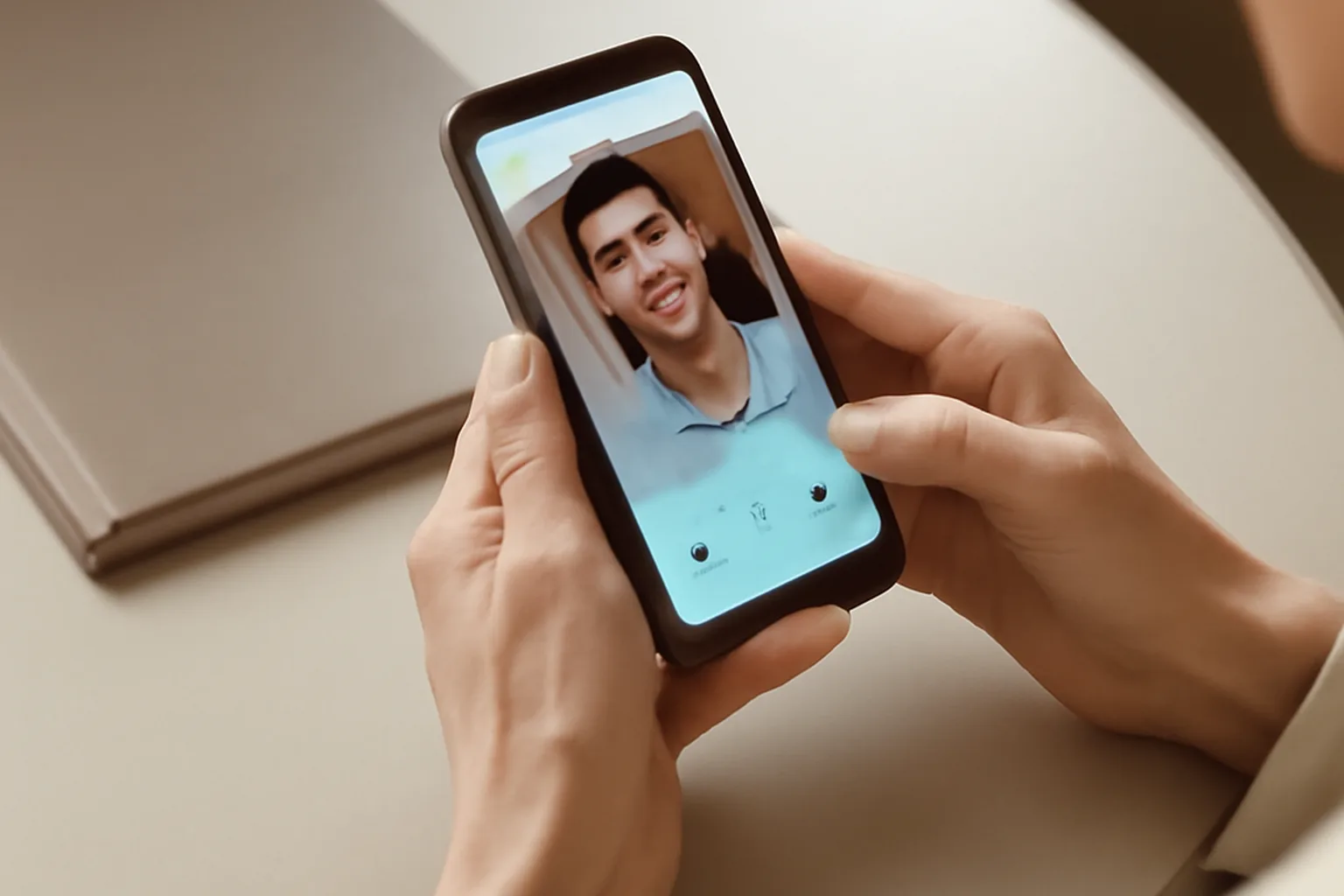
Apps and matchmaking services optimize for different things: volume versus curation.
Who Usually Gets More From Dating Apps
Apps are not automatically shallow, casual, or unsuitable for people seeking serious relationships. They are tools built around broad access and user control. That can be an advantage when you know how to use it.
Apps tend to serve these daters particularly well:
- Younger daters, who may have active social lives, comfort with digital communication, and interest in meeting people across a wide range of lifestyles and relationship goals.
- People who want a large pool, especially those living in major cities, dating outside their immediate social circle, or looking for particular communities or interests.
- Daters who want full filtering control, including the ability to set age, distance, education, lifestyle, religion, family plans, smoking, political views, or other preferences where platforms allow it.
- People whose goals may be flexible, ranging from casual dating to a serious relationship, rather than one tightly defined outcome.
- People who learn by meeting, rather than by describing a perfect match in advance.
- Daters who prefer to control pace, including when they browse, when they message, and when they take breaks.
The strongest argument for apps is not that they create more matches. It is that they offer a wider set of possibilities and let you decide how to evaluate them. You can revise your criteria immediately, look beyond a matchmaker’s network, and respond to unexpected attraction without asking anyone else to approve the introduction.
That level of control matters when your preferences are specific or evolving. Perhaps you are open to dating someone in another neighborhood, value a niche hobby, want a particular family structure, or are unsure whether a conventional “type” is actually right for you. An app gives you direct visibility into the available pool.
However, control has a downside: it can turn dating into an endless optimization exercise. It is easy to keep refining filters, comparing profiles, and assuming a better option is one more swipe away. our dating profile guide If you regularly postpone dates because no profile seems quite ideal, the abundance of app choice may be working against you.
Apps also require an honest profile strategy. If your photos are old, your stated intentions are vague, or your prompt answers signal a different lifestyle than you actually live, you will create friction before a first date. A large pool does not help if your profile attracts people who are not looking for the same thing. How to Spot a Fake Dating Profile
Who Matchmaking Services Tend to Serve Best
Matchmaking is usually most useful when the problem is not a lack of access to apps, but a lack of confidence in the app process. A service may fit well if you have repeatedly encountered the same frustrations and want a more deliberate route to introductions.
Busy professionals are an obvious example, but “busy” should mean more than having a demanding job. The better candidate for matchmaking is someone whose schedule makes regular app activity difficult and who would rather concentrate their dating energy on a smaller number of potentially relevant meetings. That might include people with frequent travel, caregiving responsibilities, unusual work hours, or a preference for keeping personal life away from their professional routine.
Matchmaking can also suit people who have had repeated negative experiences on apps. That does not mean one disappointing month or a few bad dates. It means a persistent pattern: low-quality conversations, profiles that misrepresent reality, uncomfortable visibility, an inability to find people with aligned intentions, or burnout that causes you to disengage before good prospects can develop. For a first-hand account of what curated matchmaking looks like in practice, see this Quebec-based matchmaker’s perspective.
Discretion is another major reason people consider a matchmaker. App profiles are generally visible to other users who meet the platform’s eligibility criteria. Even with privacy settings, you are participating in a public-facing dating environment. A matchmaking service typically exposes you to a much smaller group of potential introductions and may share details selectively rather than displaying a searchable profile to a broad user base.
That can matter for people who:
- Do not want colleagues, clients, acquaintances, or former partners to encounter their profile.
- Work in visible or sensitive roles.
- Prefer to keep dating separate from social media-style self-presentation.
- Want to avoid having photos and personal details circulated widely within an app environment.
- Feel uncomfortable being evaluated at speed through a handful of images and prompts.
Still, discretion should not be confused with invisibility. You will need to share enough information for a matchmaker to represent you honestly. Ask how your profile is presented, what details are shared before mutual interest is confirmed, whether photos are disclosed automatically, and how the company handles your data. Online Dating Safety Checklist
The other group that can benefit is people who are genuinely open to professional judgment. A skilled matchmaker may notice compatibility that an app filter would miss: similar communication styles, compatible schedules, shared approaches to family, aligned social energy, or complementary relationship histories. But this works only if you can accept an introduction that does not match every item on your usual checklist.
Control, Chemistry, and the Risk of Someone Else’s Bias
The control question is where many app-fatigued daters need to be especially realistic. Matchmaking does not remove judgment from dating; it transfers some judgment from you to another person.
On an app, you control explicit filtering. You can decide who meets your non-negotiables and who does not. You can reject a profile immediately based on information that matters to you. This is efficient when your requirements are concrete and well understood.
With matchmaking, you give the service a description of what you want, but the matchmaker decides how to interpret it. That can produce better outcomes when your stated preferences are too narrow. Someone might insist they only want a partner from a certain professional background, for example, while a matchmaker sees that schedule compatibility and emotional maturity have mattered more in their successful relationships.
It can also introduce bias. A matchmaker may overvalue conventional indicators of compatibility, lean too heavily on assumptions about your stated type, or misunderstand the difference between a preference and a true non-negotiable. No intake interview fully captures attraction, humor, communication style, or the subtle dynamics that make two people click.
Before signing up, be clear about what you will and will not delegate.
Keep these categories explicit:
- Relationship goal and timeline.
- Whether you want marriage, cohabitation, children, or a more open-ended relationship path.
- Geographic limits and willingness to relocate.
- Religious, cultural, or lifestyle requirements that are genuinely non-negotiable.
- Dealbreakers involving smoking, substance use, existing children, work schedule, or relationship structure.
- Privacy boundaries and the information you do not want shared early.
Leave room for human judgment on:
- Surface-level preferences that have not led to satisfying relationships in the past.
- Professional prestige or job title.
- A narrowly defined physical “type.”
- Hobbies and cultural tastes that are pleasant but not essential.
- Assumptions about what kind of personality “should” fit you.
A good matchmaker should be able to explain why an introduction was chosen without pretending there is a formula for romance. You should also be allowed to say no. Curated dating is not a license for pressure, guilt, or repeated attempts to persuade you that your boundaries are wrong.
Conversely, app users should examine their own bias. Self-directed filters can create a false sense of precision. Two people can look ideal on paper and have no chemistry; two people can fall outside your usual search parameters and still be highly compatible. The difference is not that apps are objective and matchmakers are subjective. Both involve judgment. The question is whether you want to make every early-stage judgment yourself.
Privacy and Discretion Are Different From Safety
Privacy is one of matchmaking’s clearest structural advantages, but it deserves a careful distinction. Less public profile exposure can reduce unwanted recognition and limit how broadly your dating information is displayed. It does not guarantee that every introduction is safe, compatible, or trustworthy.
On an app, safety practices remain necessary even if a platform verifies some details or offers reporting tools. On a matchmaking service, they remain necessary even if a matchmaker has interviewed the other person. Background information, identity checks, and screening policies vary widely by service. Do not assume that “curated” means extensively vetted unless the company explains exactly what it verifies — the same verification discipline covered in this identity-verification guide applies regardless of which model you choose.
Ask prospective matchmaking services direct questions:
- How are clients accepted into the pool?
- Are introductions limited to paying clients, or do they include non-paying members and outside referrals?
- What identity, relationship-status, or background checks are performed, if any?
- What information is shared before a date?
- Can you decline a match without giving a detailed explanation?
- How are complaints handled?
- What happens to your profile and data if you leave the service?
On apps, the privacy question is more practical and immediate. Use current but not overly revealing photos, avoid listing your workplace or precise address, keep early messages on-platform, and be cautious about connecting social media accounts too quickly. A large audience can create opportunity, but it also requires more active personal boundary-setting.

Matchmaking services tend to serve time-constrained professionals best.
A Hybrid Approach Can Work—If Your Story Is Consistent
Using a matchmaking service does not require deleting every dating app. Many daters use both at the same time, particularly when they want curated introductions without giving up access to a broader pool. The hybrid approach can be sensible because each model covers the other’s limitations: the matchmaker may offer discretion and curation, while apps provide speed, volume, and the possibility of meeting someone outside the service’s network.
The risk is creating contradictory signals.
If your matchmaker says you are looking for a committed relationship and your active app profile says “figuring it out,” people will notice the mismatch. If your app photos are several years old but your matchmaker has current professional photos, you are presenting different versions of yourself. If you tell a matchmaker you are available for dates but routinely postpone introductions because you are managing too many app conversations, you are wasting everyone’s time.
A workable hybrid strategy has a few rules:
-
Use the same core relationship goal everywhere.
You can phrase it differently, but do not present yourself as commitment-minded in one place and casual in another unless that genuinely reflects your openness. -
Keep photos and basic biographical facts current.
Age, city, relationship status, children, work situation, and lifestyle should not vary across channels. -
Limit your app workload.
If app use has already caused fatigue, set a schedule. For example, check messages at defined times rather than keeping notifications on all day. -
Tell the matchmaker you are using apps if asked.
Most reasonable services understand that clients may date through multiple avenues. Hiding it can make feedback less useful. -
Do not use one channel to avoid decisions in the other.
A matchmaker’s introduction deserves the same basic courtesy and timely response you would expect from an app match.
A hybrid strategy is particularly useful for someone who values privacy but does not want to rely on a small curated pool alone. You might keep one app active with strict filters and limited time investment while allowing a matchmaker to make occasional introductions. That structure reduces dependency on any one method without turning dating into a full-time project. For the pure cost side of that comparison, see our dating app cost comparison.
Set Realistic Expectations Before You Choose
The biggest disappointment in both apps and matchmaking comes from expecting the format to solve emotional problems that are not caused by the format.
Apps cannot guarantee that a large pool will produce a compatible partner quickly. Matchmaking cannot guarantee that a professionally selected introduction will create chemistry. Both options involve rejection, uncertainty, imperfect communication, and the need to show up as a clear, honest participant.
With apps, realistic expectations include accepting that many conversations will not become dates, many dates will not become second dates, and the best outcomes may come from narrowing your habits rather than increasing your activity. You may need to improve profile clarity, be more selective about whom you engage, move suitable conversations to a date sooner, and take planned breaks before resentment turns into cynicism.
With matchmaking, realistic expectations include accepting that introductions will be lower-volume and that not every match will feel obvious on paper. You may receive people who do not match your usual type. You may need to provide more detailed feedback than you are used to. And you may find that the service’s pool is smaller or less diverse than you expected, especially outside large metropolitan areas or within highly specific dating criteria.
The financial commitment should be considered, but it should not be the entire decision. Matchmaking services generally require a much higher upfront investment than app subscriptions, sometimes with different membership structures and varying levels of personal attention. That higher investment matters because it raises the stakes: you should not pay for a service simply because you are frustrated this week. Pay, if at all, because the service model matches your priorities around time, privacy, curation, and shared decision-making.
Before choosing either route, write down your answer to these questions:
- Do I want more options or fewer, better-screened introductions?
- Am I willing to spend time searching, or would I rather spend time giving feedback to a matchmaker?
- How important is privacy from acquaintances and professional contacts?
- Which preferences are true dealbreakers, and which are habits I may need to question?
- Do I want complete control over who enters my dating life?
- Am I looking for help with access, with screening, or with my own dating patterns?
- Can I afford a higher upfront commitment without expecting it to guarantee a relationship?
If you want broad choice, direct filtering, and the ability to date across the casual-to-serious spectrum, apps are likely still your best primary tool. If you want discretion, reduced search labor, and a small number of curated introductions—and you are comfortable sharing control with a professional—a matchmaking service may be worth exploring. For many app-fatigued daters, the strongest answer is not abandoning apps entirely but using them more intentionally while testing whether curated introductions genuinely improve the quality of their dating experience.