
Online dating has revolutionized how we connect, but with that convenience comes real risk. From identity theft to catfishing and dangerous in-person encounters, staying safe requires more than good instincts — it requires a system. This 2026 checklist provides 25 essential safety tips to protect your privacy, spot scams early, communicate securely, and meet matches with confidence. Before diving into the checklist itself, see how the online dating safety guide frames the broader security landscape that these tips fit into.
Section 1: Protecting Your Profile and Personal Data
- Avoid using your real name, birthdate, or other identifiable information in your username.
- Choose a neutral username that does not reveal personal details.
- A unique username makes it harder for someone to find your social media profiles through a simple search.
Tip 2: Limit Personal Information in Your Bio
Your dating profile bio should be engaging but deliberately vague. Avoid including details like your workplace, school, or exact neighborhood. Scammers can use this information to build false familiarity or impersonate you. Share only what is necessary to spark interest without compromising your privacy.
- Keep all communication within the dating app’s messaging system until trust is established.
- Avoid sharing your phone number or email in your profile.
- Treat early requests to switch to text or email as red flags.
Tip 4: Avoid Sharing Photos with Identifiable Backgrounds
Photos with recognizable landmarks, street signs, or license plates can inadvertently reveal your location. Opt for neutral backgrounds or images that do not contain identifiable details. If you share a photo featuring your pet, make sure the collar does not show your name or a visible home address.
Tip 5: Never Include Your Phone Number or Email in Your Profile
Scammers harvest contact details from profiles to spam, impersonate, or phish victims. Keep all communication within the dating app’s messaging system until you have established real trust. If someone insists on switching to text or email very early, treat it as a red flag.
Tip 6: Use a Separate Email for Dating Apps
Create a dedicated email account for online dating to compartmentalize your digital life. This prevents potential data breaches on dating platforms from affecting your primary email, which may contain banking information, work correspondence, or access to other accounts.
Tip 7: Enable Two-Factor Authentication (2FA)
Protect your dating app account from unauthorized access by enabling two-factor authentication wherever the option is available. This adds a second verification layer — a code sent to your phone or email — so that even a stolen password cannot give someone access to your account.
Section 2: Spotting Warning Signs Early
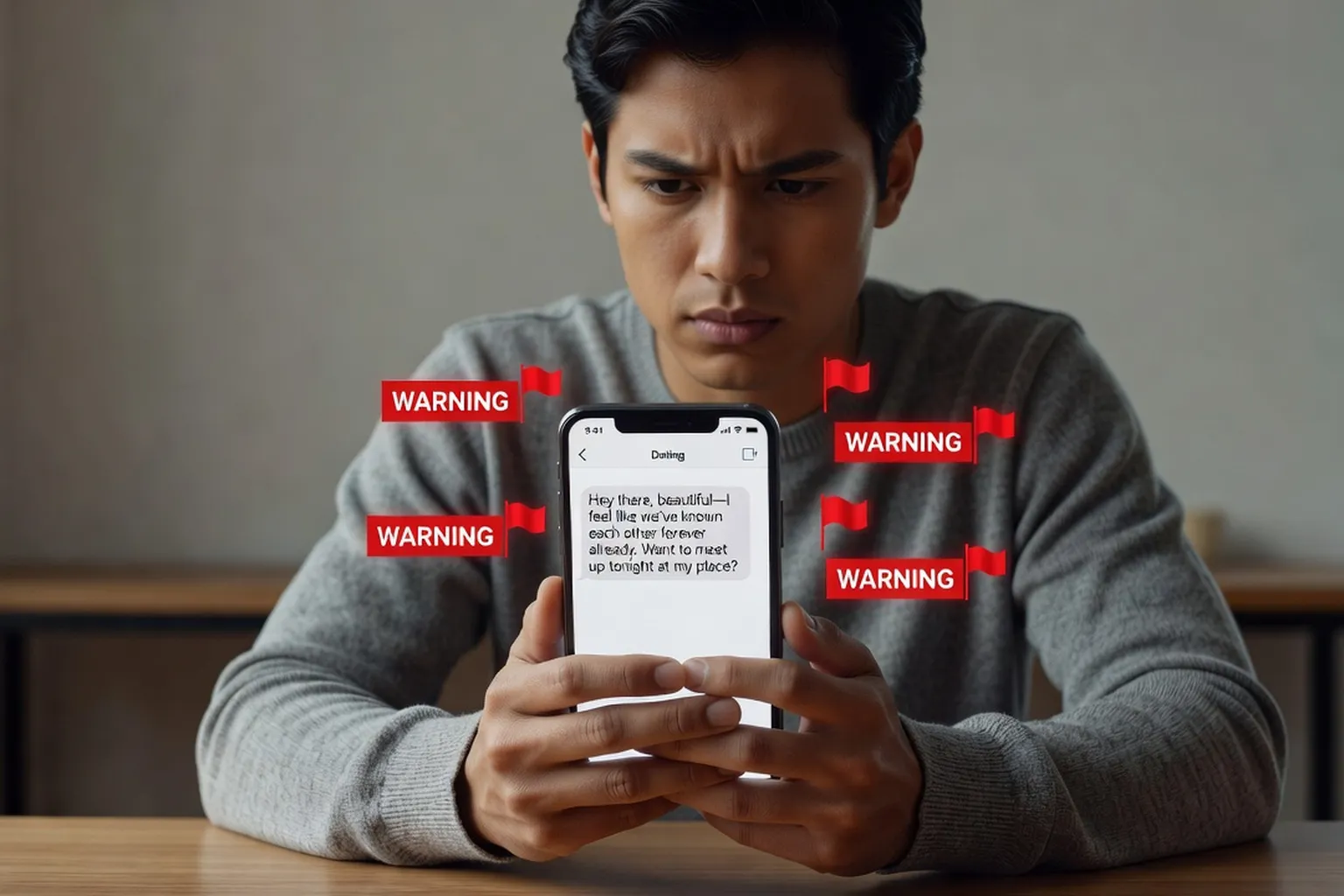
Most warning signs are noticeable early on, provided you already know which patterns to watch for.
- Use Google Images or TinEye to check if a profile photo appears elsewhere online.
- Be cautious if the image links to multiple profiles or stock photo sites.
- Reverse image search is an effective tool for verifying identity.
Tip 9: Be Wary of Love Bombing
Excessive affection, grand declarations of love within days, or intense pressure to commit early are classic manipulation tactics. If someone professes deep feelings within the first week of contact, they may be trying to cloud your judgment and rush you past the point where you would naturally question their motives.
Tip 10: Watch for Inconsistencies in Their Stories
Pay close attention to the details they share about themselves over time. Scammers frequently change their backstory, job title, or claimed location. If their narrative does not add up or they deflect specific questions, trust that instinct. Inconsistency is one of the clearest tells of a fabricated identity.
For a complete breakdown of the patterns fake profiles use and how to counter them, our guide on how to spot fake dating profiles goes deeper than any single checklist item can.
Tip 11: Avoid Profiles with No Bio or No Photos
Empty profiles or those with only one photo and no bio are common templates for fake accounts. Legitimate users almost always provide some personal context, even if brief. Be especially cautious of profiles that redirect you to external sites through links in the bio, as these are often phishing attempts.
Tip 12: Check Activity Patterns and Response Style
New profiles with minimal activity, suspiciously generic responses, or copy-pasted opening messages are often indicators of bot accounts or scammers managing multiple conversations simultaneously. Look for profiles that show engagement patterns consistent with a real person living a real life.
Tip 13: Be Cautious of Any Financial Request
Any request for money, gift cards, or financial assistance is a hallmark of romance scam operations. This applies regardless of how compelling or sympathetic their story is. Never send money or share financial account information with someone you have not met in person and verified over a significant period of time.
Tip 14: Cross-Check Details with a Simple Search
If you feel uncertain about a match, search their name, username, or any unique details they have shared — their claimed workplace, hometown, or professional background. Look for social media profiles, professional listings, or any online trace. A complete absence of verifiable digital presence is itself a meaningful data point.
Section 3: Safe Communication Practices
- Keep communication on the dating app until sufficient trust is established.
- Be wary of requests to move conversations to text, email, or social media early.
- Dating platforms monitor for suspicious activity, unlike SMS or personal email.
Tip 16: Avoid Sharing Real-Time Location
Never share your live location with a match before meeting them in person. Real-time location sharing through apps like WhatsApp or Snapchat can be exploited by anyone with problematic intentions. The same caution applies to long-distance relationships — our guide to building online LDRs safely covers communication security in sustained digital connections specifically.
Tip 17: Watch for Language and Cultural Inconsistencies
Be cautious of matches who claim to be local but write with unusual phrasing, grammar patterns inconsistent with their claimed background, or cultural references that do not fit their stated identity. Scammers who operate across borders often rely on these inconsistencies being overlooked.
Tip 18: Do Not Share Explicit Photos or Videos
Sextortion scams have grown significantly. Scammers coerce victims into sharing intimate content and then threaten to distribute it publicly unless they pay. The rule is straightforward: never send explicit material to someone you have not met in person and do not fully trust. Digital content, once shared, cannot be unshared.
Tip 19: Use Video Chat to Verify Identity Before Meeting
Before agreeing to an in-person meeting, request a video call through the dating app’s built-in feature or through a mainstream platform like FaceTime or WhatsApp. Live video is the single best tool for verifying that a person matches their photos and is genuinely who they claim to be.
Section 4: Meeting In Person Safely

A busy, well-lit venue reduces risk and gives you a natural way to leave if something feels wrong.
Tip 20: Always Meet in a Public Place
For your first in-person meeting, choose a well-lit, busy location — a café, restaurant, or public park. Avoid private or secluded venues until you have built substantial trust over multiple meetings. Public places reduce risk and provide a natural exit if the interaction feels wrong.
Tip 21: Tell Someone Your Plans Before You Go
Before every first date with someone from an online platform, share the key details with a trusted friend or family member: where you are going, who you are meeting, and when you expect to be back. Agree on a check-in time. Apps like Find My Friends can allow temporary real-time location sharing with that contact.
Tip 22: Handle Your Own Transportation
Do not depend on your date for transportation to or from the meeting. Drive yourself or use a ride-sharing service. This ensures you can leave at any point without feeling obligated or trapped. If your date insists on picking you up before you have developed any in-person trust, that is a meaningful warning sign.
Tip 23: Trust Your Gut Feeling
If something feels wrong during the date — their behavior, the conversation, the environment — do not override that instinct in the name of politeness. Cutting a date short is always a reasonable choice. Your safety assessment does not require proof or justification.
Mainstream apps like Tinder have developed specific safety features in response to this exact concern — our Tinder review covers how the platform handles in-app safety tools and identity verification.
Tip 24: Keep Your Home Address Private
Even if the first meeting goes well, do not volunteer your home address or invite someone there. End the date on neutral ground and on your own terms. A date who pushes early for your address, even framed as innocent curiosity, is displaying a pattern worth taking seriously.
Tip 25: Consider a Video Call If You Are Still Uncertain
If you are not yet confident about meeting in person, suggest a video call first. A live call where the other person can respond in real time to unpredictable questions is significantly harder to fake than a photo or a written profile. For ongoing safety guidance and connection with a community that takes relationship security seriously, serious online dating community and relationship safety resources provide practical frameworks beyond what any single checklist can cover.