

Rachel Kim
Professional Matchmaker & Dating Consultant · Founder of Maple & Heart Matchmaking · Toronto · 9 years experience
Rachel Kim didn’t start her career planning to become a matchmaker. For nearly a decade before founding Maple & Heart Matchmaking, she worked as a digital marketing specialist in Toronto — the kind of person who understood funnels, conversion rates, and what makes people click. Then she tried online dating seriously for the first time, and everything she thought she knew about connecting with people fell apart. “I treated it like a campaign,” she says now, laughing. “I A/B tested my profile photos, tracked response rates in a spreadsheet, optimized my opening lines. I was the most efficient dater alive. I also went on sixty dates in eight months and didn’t find a single real connection.”
That experience, frustrating as it was, turned out to be exactly the education she needed. Rachel spent the next two years studying what actually works in human attraction, trained under two senior matchmakers in Toronto, and launched Maple & Heart in 2017. Since then, she has worked with over six hundred singles across North America, helping them navigate everything from app strategy to first-date psychology. According to Pew Research data on online dating behaviors, roughly 30% of American adults have used a dating app — and the majority report mixed-to-negative experiences. Rachel’s practice exists precisely in that gap between potential and reality. She agreed to sit down with us to share what she’s learned, what she’s sick of seeing, and what she genuinely believes could change outcomes for singles willing to approach apps differently.
Q1: After 9 Years as a Matchmaker, What’s Your Overall Verdict on Dating Apps?
Question: “After nine years in this industry, what’s your honest, unfiltered take on dating apps? Are they good for people or not?”
Rachel Kim: “The honest answer is: it depends entirely on how you use them. Dating apps are neutral infrastructure, like a gym membership. The gym doesn’t make you fit — your approach to using it does. I’ve seen apps genuinely change people’s lives. I’ve personally introduced couples who met on Hinge or Bumble and are now married. But I’ve also seen the app experience genuinely damage people’s self-worth, distort their perception of what a healthy relationship looks like, and create habits that are completely counter-productive to actually finding someone. The difference between those two outcomes almost never comes down to the platform itself. It comes down to the mindset people bring to it. What I’ve noticed over nine years is that people are getting smarter about some things — they’re more aware of fake profiles, they’re quicker to move to video calls — but the core behavioral mistakes I see in clients are almost identical to what I was seeing in 2017. The apps have evolved. Human behavior on the apps hasn’t, nearly as much.”
Q2: What Are the Biggest Mistakes You See Singles Making on Dating Apps Consistently?
Question: “You’ve reviewed hundreds of client profiles and coached people through the app process. What are the most common and most damaging mistakes?”
If you want Rachel’s matchmaker-approved shortlist translated into a ranked comparison, see the top 10 dating sites ranked by our experts to identify which platforms best match your relationship goals.
- Photos that don’t do the work: Not just bad photos — photos that are technically fine but emotionally inert. Group shots where you can’t tell who’s the person, gym selfies, sunglasses in every single image, photos from 2019 when you looked different. Your photos need to show what it would feel like to be across a table from you.
- Bios that are actually just lists: ‘I love hiking, coffee, and my dog.’ So does literally everyone on this app.
- The copy-paste opening message: It takes thirty seconds to read someone’s profile and reference something specific. Not doing that signals immediately that you’re not really interested in them as a person.
- Treating the app like a numbers game: Matching with a hundred people and messaging fifty of them without real intention. This creates a psychological loop where you’re constantly in acquisition mode and never in connection mode.
- Staying on the app too long before suggesting a real meeting: If you’re still texting someone on the app after two weeks without any movement toward an actual date, you’ve already killed most of the momentum. Apps are for discovering potential. They’re not where connection gets built.
Q3: How Does the Swipe Mechanic Psychologically Affect How We Judge Potential Partners?
Question: “There’s a lot of criticism of the swipe model — that it turns people into commodities. From a matchmaking perspective, what does it actually do to our judgment?”
Rachel Kim: “The swipe mechanic is psychologically very powerful and not in a good way for most users. What it does is train your brain to make snap aesthetic judgments at a pace that’s completely divorced from how attraction actually works in real life. When I meet two people in person and introduce them, there’s body language, tone of voice, the way someone laughs — a thousand micro-signals that don’t exist in a profile photo. The swipe strip all of that away and replaces it with a single-image first impression. Research on decision fatigue shows clearly that after making dozens of similar choices in a row, the quality of your judgment declines sharply. Applying that to dating: after fifty swipes, you’re not evaluating people thoughtfully anymore. You’re reacting. And here’s the thing people don’t talk about enough — when you’re swiping quickly, you’re not just making bad decisions about others, you’re training yourself to expect relationships to be immediately and effortlessly obvious. That expectation then travels with you into real-world interactions. Clients come to me frustrated that dates feel awkward or slow. Of course they do. Swiping conditions you for instant certainty. Real relationships almost never start with instant certainty.”
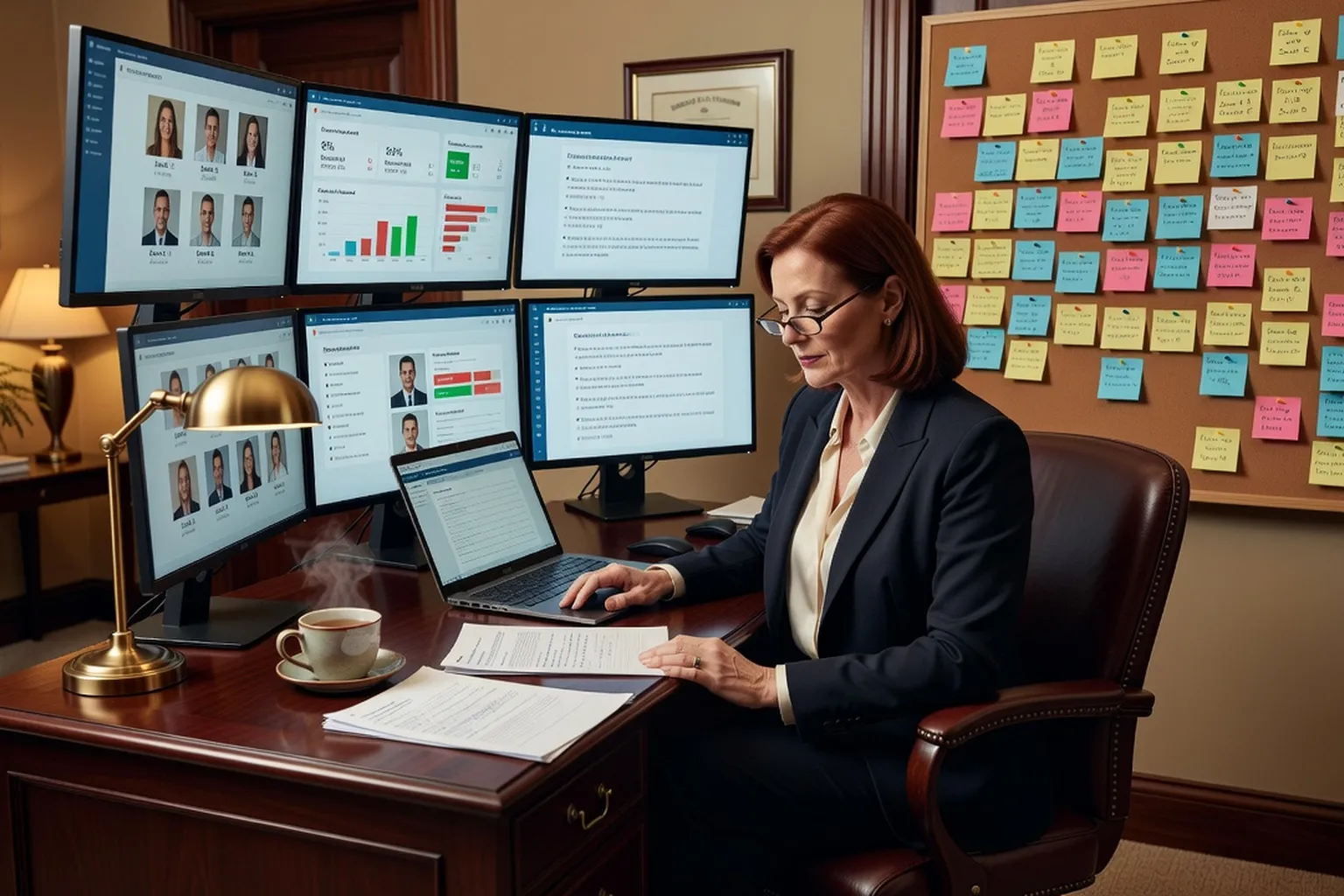
Years of reviewing client profiles produce patterns that individual users rarely notice on their own.
Q4: What Does a Great Dating Profile Actually Look Like From a Matchmaker’s Perspective?
Question: “If you were building someone’s profile from scratch, what would you include and what would you avoid?”
- Who you actually are: Photos should do most of the heavy lifting. I recommend six photos with a specific structure: one clear, well-lit face photo, one full-body photo in a context that shows personality, one action photo where you’re doing something you love, one social photo with friends or family, one candid or travel photo, and one slightly more formal photo that shows range.
- What your life feels like day to day: The bio has one job: make the right person feel seen. Write for your ideal match, not for everyone. If you want someone who values long-form conversations about ideas over casual hookups, say that — even if it narrows your pool.
- What you’re looking for: Avoid the wish lists — ‘must love travel, must be ambitious, must be X’ — they read as a checklist, not a person. And absolutely never, ever describe yourself as ‘sarcastic’ without a concrete example of what that actually sounds like.
Q5: Should People Be Using Multiple Apps Simultaneously? What’s the Optimal Strategy?
Question: “A lot of single people are juggling Tinder, Hinge, Bumble, and niche platforms all at once. Is that a smart strategy?”
Rachel’s profile advice is clear — if you want a step-by-step implementation guide, how to write a dating profile that actually works translates those principles into a concrete action plan.
Rachel Kim: “No, and I’ll tell you exactly why. When you’re on three or four apps at once, your attention is perpetually split. You end up having shallow, parallel conversations on multiple platforms simultaneously, and none of them get the depth of engagement that actually leads somewhere. More platforms also means more notifications, more decision-making, more cognitive load. The mental energy you spend managing four apps is energy not being spent on building real connections. My recommendation for most people is two platforms maximum, and they should serve different purposes. One mainstream app — Hinge or Bumble are my usual recommendations because they’re designed around conversation prompts and actions rather than passive swiping — and one niche app specific to something that genuinely matters to you. If your cultural background is important to your relationship, a culturally-specific platform. If faith is important, a faith-based platform. If you’re looking specifically for long-term committed relationships, a platform built around serious intent. The second app should represent something specific about your values, not just be another pool of profiles. Beyond two platforms, you’re spreading yourself too thin, and the quality of every interaction declines.”
Q6: How Do Niche Dating Platforms Compare to General Apps in Your Experience?
Question: “You work with a lot of clients who have specific cultural or religious backgrounds. How do niche dating platforms — Russian, Latin, Asian, Muslim — perform compared to Tinder or Hinge?”
Rachel Kim: “This is one of my strongest opinions and it’s backed by what I see in client outcomes. Niche platforms consistently outperform general apps for people whose cultural background or core values are central to their relationship vision. Here’s why: the self-selection process that happens when someone downloads a Russian dating app, or a Muslim marriage app, is fundamentally different from signing up for Tinder. They’ve already made a declaration. They’ve said ‘this aspect of who I am matters enough that I’m specifically seeking someone who shares it.’ That pre-existing alignment removes a huge amount of friction from early conversations. You’re not explaining yourself from scratch. The smaller user base is a real tradeoff — you’ll have fewer matches, fewer options on the surface. But match quality-per-interaction is substantially higher in my clients’ experience. I’ve seen people who spent two years on the major apps find their person in four months on a niche platform, simply because the shared context accelerated trust. I always point clients who are serious about cultural compatibility to resources like professional matchmaking and serious dating site comparisons to get a broader perspective before choosing a platform. The general apps optimize for volume. Niche platforms, at their best, optimize for fit.”
Q7: What’s the Difference Between a Match That Leads Somewhere and One That Goes Nowhere?
Question: “You’ve observed hundreds of dating processes as a professional. What patterns do you see in matches that develop into real relationships versus matches that fizzle?”
For the psychological dimension Rachel references, read our interview with Dr. Emma Walters on the psychology of international online dating — two expert perspectives that complement each other particularly well.
Rachel Kim: “The single biggest predictor I’ve identified is what I call ‘mutual investment asymmetry.’ When one person is significantly more engaged than the other from the start — messaging more quickly, more enthusiastically, asking more questions — it almost never equalizes. The gap tends to widen. Matches that lead somewhere tend to have roughly symmetrical investment from very early on. Both people are curious, both are responsive without being desperate, both are moving the conversation forward. The second pattern is how quickly the conversation goes somewhere real. Small talk is a death sentence on apps. ‘How was your day?’ ‘Good, yours?’ — that exchange happens thousands of times per day on every dating platform and it leads nowhere, because it gives neither person anything to respond to with genuine feeling. Matches that work tend to go somewhere slightly unexpected in the first three exchanges. Someone shares an actual opinion, reveals something slightly vulnerable, makes a joke that requires the other person to know something about them. The third pattern is time-to-date. Every additional day of pre-date messaging decreases first-date conversion rates in my experience. Two to five days of conversation, then propose a meeting. That’s the window. Beyond that, you’ve created a text relationship that has its own expectations and momentum, and converting it to an in-person encounter becomes genuinely harder.”
Q8: At What Point Do You Recommend Someone Work With a Human Matchmaker vs. Going Solo on Apps?
Question: “You obviously have a vested interest in answering this question a certain way, but I’ll ask it anyway: when should someone actually hire a matchmaker?”
Rachel Kim: “I appreciate the challenge, and I’ll try to answer it honestly. There are clients I actively tell not to hire me, or not yet. If you’ve been on apps for less than six months and your profile is genuinely strong and you’re being proactive, stick with it. Apps work for a lot of people, they’re free or nearly free, and there’s real value in learning to navigate the space yourself. The signals that suggest matchmaking might be worth the investment are pretty specific. One: you’ve been actively using apps for twelve months or more, you’ve been on real dates, and you’re still not finding compatible long-term potential. Not ‘I haven’t found the love of my life yet’ — that’s a different thing — but genuinely no pattern of promising connections. Two: the process is consistently damaging your confidence or your mood in ways that are affecting other areas of your life. Dating apps should be one tool, not a continuous source of rejection. Three: you have very specific requirements — cultural, professional, lifestyle — that make mainstream apps genuinely inefficient. A matchmaker can search for those specific profiles intentionally rather than waiting for the algorithm. Four: you simply don’t have the time or energy to invest in the process consistently, and you’d rather pay for expertise and curation. That’s a completely legitimate reason. Matchmaking isn’t a last resort. For some people, it’s just the better tool from the start.”
Q9: What Should Someone Do in the First 72 Hours After a Match to Maximize Success?
Question: “Let’s end with something practical. Someone just matched with a person they’re genuinely interested in. What’s the exact playbook for the first 72 hours?”
- Hour zero to three: Send a message within three hours of matching, ideally within one. The message should reference something specific from their profile. Keep it short — two to three sentences maximum — and end with either a genuine question or a light observation that invites a response.
- Hours three to twenty-four: If they respond, keep the same energy they’re bringing. Match their response length roughly. Introduce something real about yourself in this window — something that creates a genuine opening for connection.
- Day two to day three: If the conversation is flowing, propose a specific date. ‘I’m thinking Saturday afternoon — there’s a great coffee place near the waterfront, or we could do a walk in the Distillery District if the weather holds. What works for you?’ Giving options shows thoughtfulness. Being specific signals genuine interest.
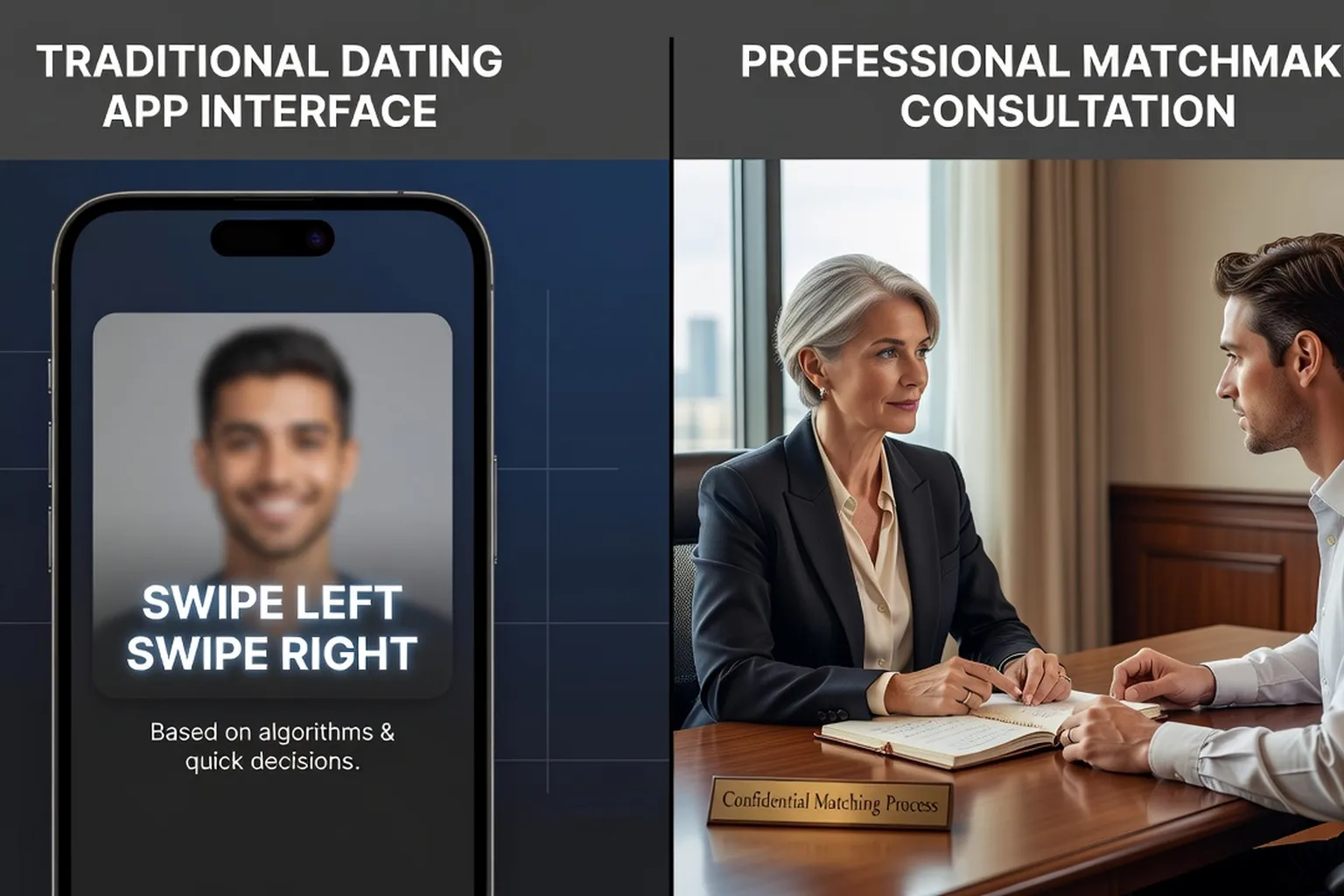
Curated introductions and swipe-based volume solve different problems, and they cost accordingly.
Quick Fire Round: 5 Dating App Myths Rachel Debunks
After almost a decade in the industry, Rachel has heard every piece of conventional wisdom about dating apps — and she has strong opinions about which ones are actively misleading.
Rachel’s 72-hour rule starts with the right opener — how to write the perfect first message on a dating app gives you the formulas and real examples to make that critical first impression count.
Myth 1: “More matches equals more success.”
“This is the most persistent myth and probably the most damaging. More matches equals more noise. I’ve had clients with sixty unread matches who hadn’t had a single date in two months. I’ve had clients with four matches who went on a date with one of them within a week. Match volume is a vanity metric. It measures the platform’s algorithm response to your photos, not your actual compatibility with real humans. Quality of engagement is the only metric worth tracking.”
Myth 2: “Premium membership guarantees better results.”
“Premium features can be useful — seeing who liked you, unlimited swipes, better placement in the algorithm. But I’ve had clients on every tier of every major platform, and premium membership consistently underdelivers on its implicit promise. What it actually delivers is more exposure to the same pool of users. If your profile isn’t working at the free level, paying more doesn’t fix a profile problem. Fix the profile first, then consider whether boosted visibility is worth the cost.”
Myth 3: “The algorithm knows who you should date.”
“The algorithm knows who has high engagement with your profile photos and whose photos you spend time looking at. That’s not the same as compatibility. Algorithms optimize for engagement because engagement keeps you on the platform. Your relationship goals are not the algorithm’s goals. The algorithm is not your friend. It is a product built by a company that needs you to keep using the app. Treat its suggestions as a starting point, not a verdict.”
Myth 4: “People on niche sites are less serious.”
“The opposite is consistently true in my experience. Niche sites require a more deliberate choice to sign up. The person who downloads a culturally-specific or value-specific platform has already made a statement about what matters to them. That intentionality translates into how they engage. Mainstream app users run the full spectrum from casual to serious, and you can’t tell which one you’re talking to until several conversations in. On a well-designed niche platform, the intent is often clear from the start.”
Myth 5: “Talking a lot before meeting is a sign of incompatibility.”
“This one is partly true but mostly misunderstood. Talking a lot before meeting isn’t inherently a sign of anything — it depends entirely on what you’re talking about. If you’ve had three weeks of deep, substantive, genuinely illuminating conversations and you haven’t met yet, you’ve built something real and the first date will be significantly easier. If you’ve had three weeks of ‘How was your day?’ ‘Fine, you?’ then yes, meeting becomes uncomfortable because you’ve created familiarity without content. The issue isn’t the quantity of conversation — it’s the depth. Have fewer, better exchanges. Then meet.”
Rachel’s 3 Matchmaker Rules for Dating Apps
After nine years and over six hundred clients, Rachel has distilled her approach to a handful of principles she returns to again and again. These aren’t hacks or tricks. They’re frameworks for using apps in a way that doesn’t slowly hollow out your experience of looking for love.
Rule 1: Treat every profile as a person, not a possibility.
“The moment you start swiping through profiles the way you’d scroll through Netflix — looking for something to capture your attention in the first three seconds — you’ve already lost the mindset that leads to real connection. Before you swipe on anyone, read what they’ve written. Look at all their photos. Ask yourself: ‘Could I have a genuine conversation with this person?’ Not ‘are they attractive enough?’ Not ‘do they check my list?’ Could you have a real conversation. If yes, that’s a match worth pursuing. If not, no amount of physical attraction will sustain what comes after.”
Rule 2: Decide what you want before you open the app.
“Most people open dating apps in a vague state of hoping something good will happen. That vagueness is exactly what the app experience exploits. You become reactive instead of intentional. Before each session, spend thirty seconds being specific: what kind of person am I hoping to find today? What would I like to learn in a first conversation? What’s one genuine thing about me I want to communicate this week? That thirty seconds of intention changes everything about how you engage. You’re no longer a passive consumer of profiles. You’re someone with a purpose, and that comes through in every message you send.”
Rule 3: Set a time limit and keep it.
“Swipe fatigue is physiologically real, not just a buzzword. After twenty to thirty minutes of profile browsing, your decision-making quality degrades measurably. You start swiping on autopilot. You miss profiles that would have genuinely interested you at minute five. You engage with people you’re not actually drawn to because you’ve been staring at the screen long enough that your standards have blurred. Set a timer. Thirty minutes maximum per session. Close the app when it goes off, regardless of where you are. Come back tomorrow with fresh eyes. I promise you will make better choices, have better conversations, and feel better about the whole experience if you apply this one rule consistently.”
Rachel Kim’s work at Maple & Heart Matchmaking reflects a conviction that technology and human judgment don’t have to be in opposition when it comes to finding real connection. Apps can be powerful tools. They can also be traps. The difference, as she’d be the first to say, has almost nothing to do with which app you’re using — and almost everything to do with how clearly you know yourself before you pick up your phone.